

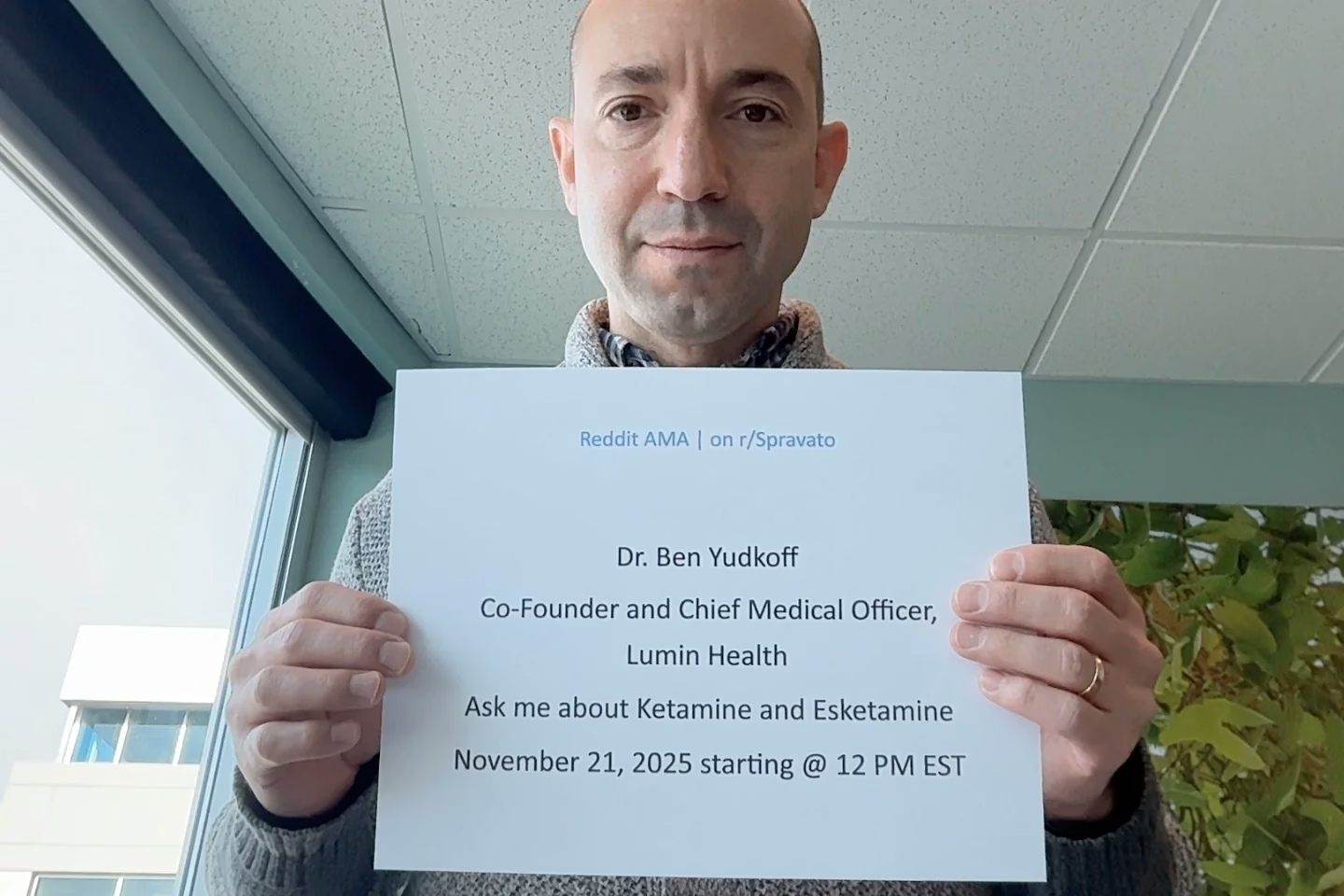
Dr. Ben Yudkoff, Co-Founder and Chief Medical Officer at Lumin Health, hosted a Reddit AMA on the Spravato community on November 21, 2025. The below blog post is a recap of one of the questions presented on that AMA, syndicated to the Lumin Health blog in the event that it answers any questions about ketamine therapy, Spravato treatment, or general concerns you may have about treatment.
Read the full AMA on r/Spravato here
Don’t hesitate to get in touch with us if you’re interested in learning more about ketamine for depression at Lumin Health. Thank you once again to the moderators and community members for facilitating such an engaging discussion.
Crazy_old_maurice_17 asks:
There's discussion regarding what to do during Spravato & IV ketamine treatments (meditate, sleep, look at one's phone, read a book, etc.). The drug's efficacy shouldn't (in theory) be influenced by such activities. Have you observed any patterns between patient activities during treatment and remission rates?
Answer:
Hi Maurice, I don't know if the drug's efficacy is influenced by the kinds of activities engaged in during the treatment. Here's the soft reason: people who are able to stay relaxed during the treatments avoid "bad trips" and are able to complete treatment courses. In that way I think there is a cause for engaging in certain kinds of activities - but mostly to the end of staying in a good place. I don't know if any activity, itself, augments the biological mechanism of action of medication.
As far as patterns, there's one, overarching pattern that comes up: patients who make themselves the most comfortable with the treatment tend to have the best outcomes. This can include a lot of different practices. Let's run through them:
Taking time before a session to have a break from the quotidian stressors that otherwise swirl a mind.
Having time at the end of a session to relax (grab a cup of coffee, go for a walk, etc.)
Keeping the room dark
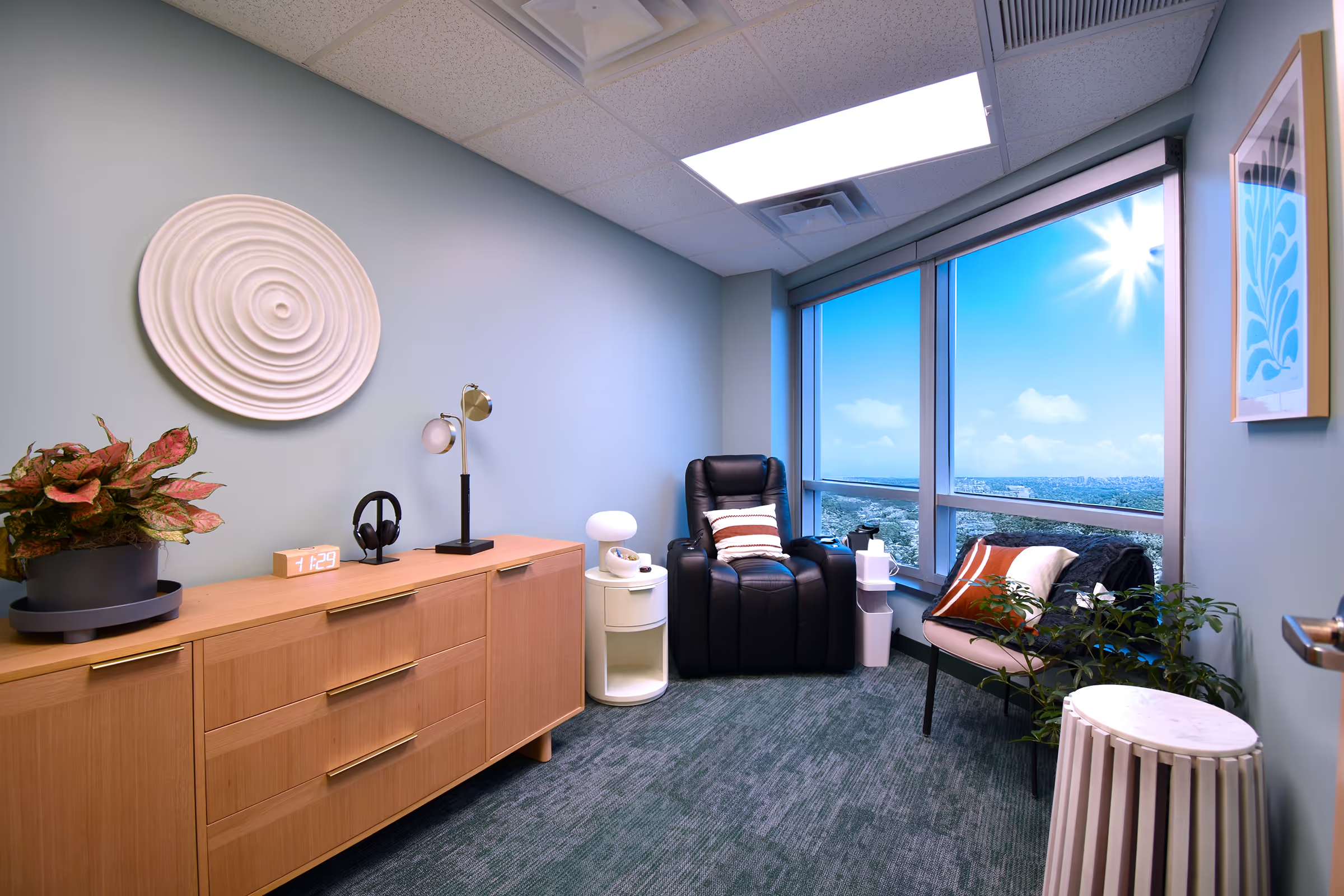
Having a private room (important for a sense of safety, for granting permission to cry or laugh in a session, some people like to move and do yoga (for example) during certain stages of the treatment, and so on)
Journaling at some point during the experience
Doing artwork
Taking medications that help with side effects (like medications to treat anxiety, nausea, or blood pressure)
Listening to music
Having a trusted other be present in the room
Generally, I recommend against certain things during sessions: doing work, trying to reconcile strained relationships while the medicine is firmly running. But people find their own way to make the treatment most useful and most comfortable for them. I like to have conversations with people before the dose to know what their plan is and respect a person's agency and self knowledge.
You've read the science. Now take the next step.
Lumin Health provides safe, expert-administered ketamine and Spravato treatment across Massachusetts and the greater Washington DC/Maryland area. Your journey starts with a free, no-commitment intro call.
Available in Massachusetts and the greater Washington DC/Maryland area.