

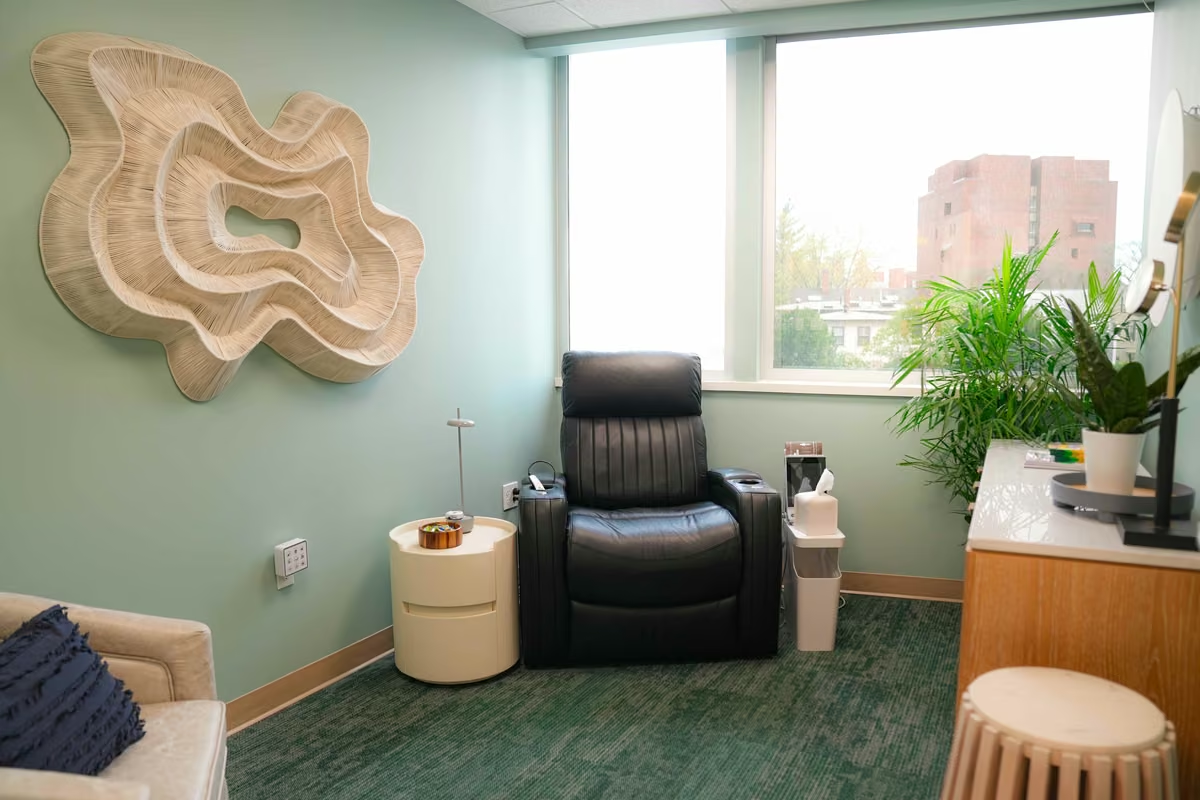
Ketamine therapy at Lumin Health isn't just about the ketamine dosing
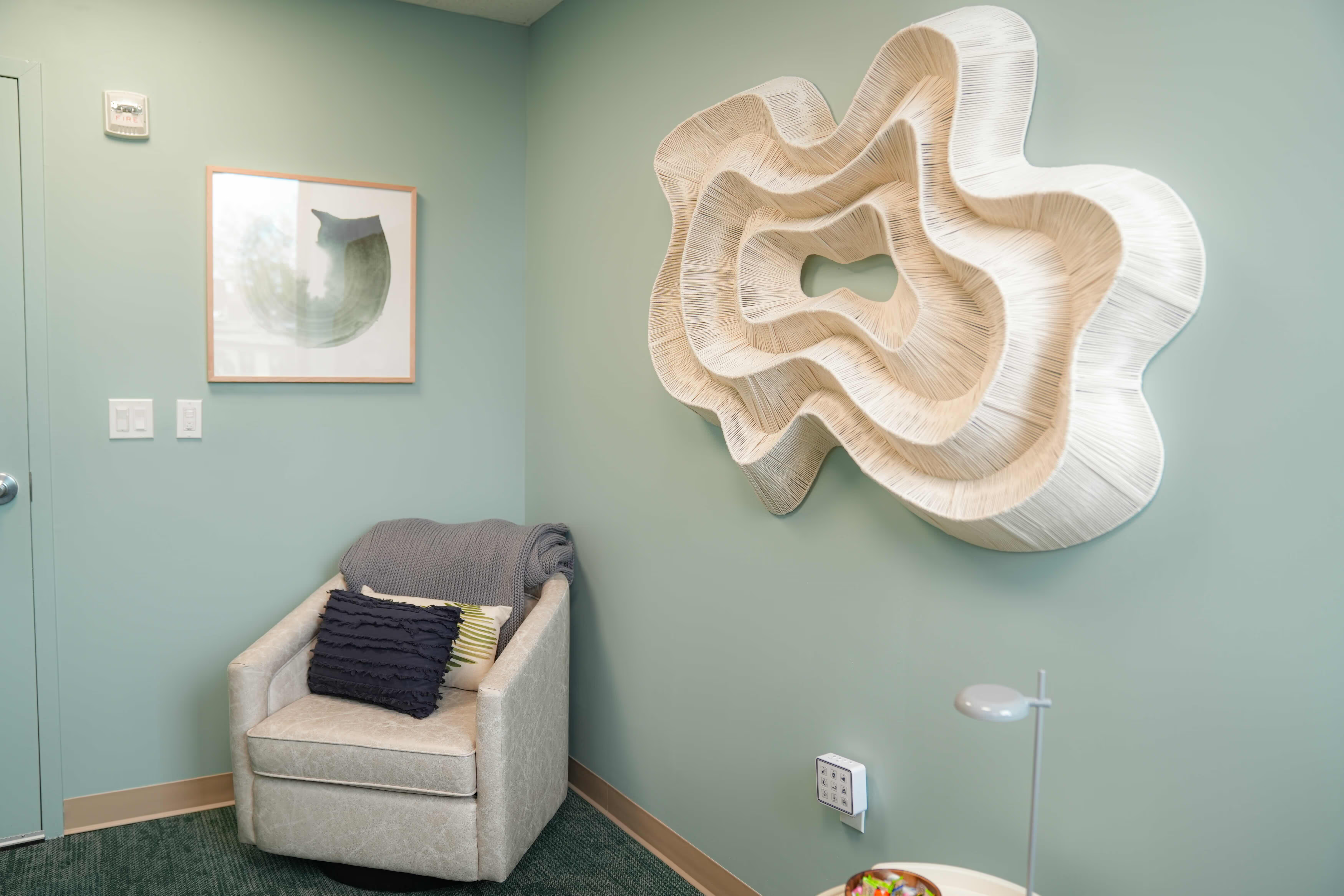
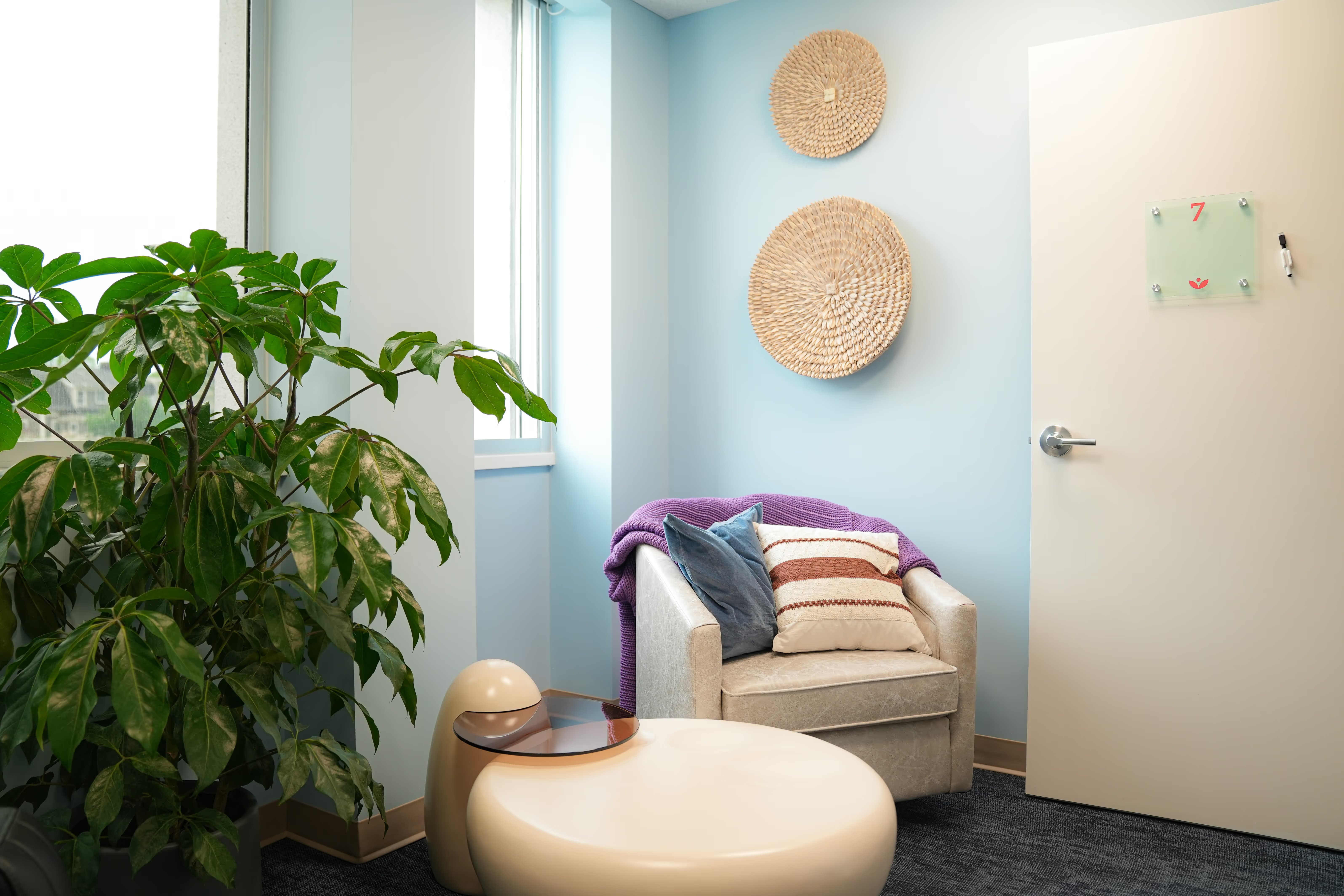
Your private treatment suite is designed with clinical rigor and your emotional comfort in equal regard: cozy blankets, pillows, eye masks, art books and more.
We pair clinical rigor with genuine care: continuous monitoring, a comfortable medical environment, and a team focused on your safety and well-being throughout every session.

Your path to ketamine treatment at Lumin Health
From your first call to your first session, our team guides you through each step. Two of them can happen side by side, so you're often not waiting on one to start the other. Tap a step to see what it involves, courtesy of a short intro from a Lumin Health leader.
1
Free consult call
With our concierge team
→
STEP 2 · Typically similarly timed
2a
Clinical intake
Meet your psychiatrist or Lumin Health clinician
2b
Insurance verification
We handle it with your insurer
→
3
Schedule your first treatment
Once both are complete
→
4
Your treatment course
Twice a week to start
STEP 1
Free consult call
Who you'll talk to: our patient concierge team
A friendly first conversation, not a medical appointment. We learn what you are looking for, explain your options and map out your next steps together.


The concierge call, with Sahana (1:15)
STEP 2 · TYPICALLY SIMILARLY TIMED
Clinical intake
Who you'll talk to: your psychiatrist or Lumin Health clinician and our intake team
You meet your psychiatrist or Lumin Health clinician, who confirms treatment is a good fit and sets your plan, and you complete your intake forms.
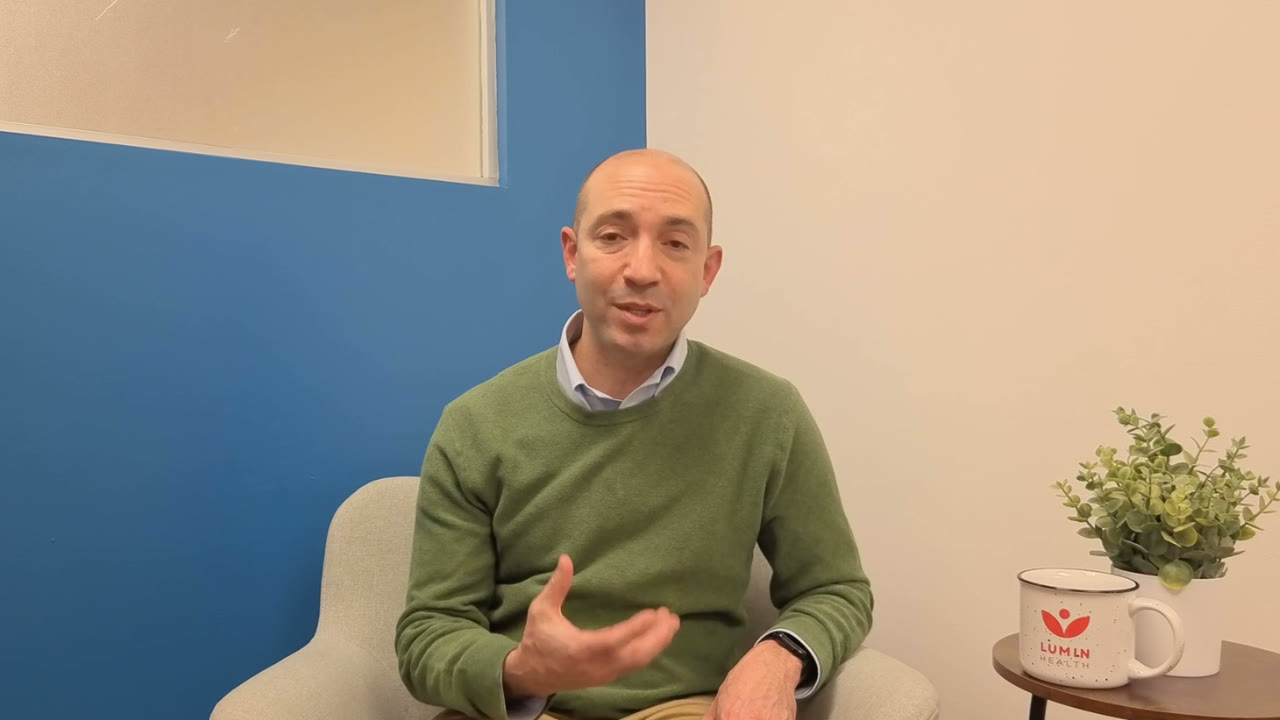

The clinical intake, with Dr. Ben Yudkoff (1:27)
STEP 2 · TYPICALLY SIMILARLY TIMED
Insurance verification
Who you'll talk to: our patient concierge team
Typically while intake is under way, we check your coverage and handle the authorization with your insurer. We walk you through what it means on a call.

How insurance verification works, with Sahana (0:30)
STEP 3
Schedule your first treatment
Who you'll talk to: our patient concierge team
Once intake and insurance are both complete, we book your first session at the location that works best for you.
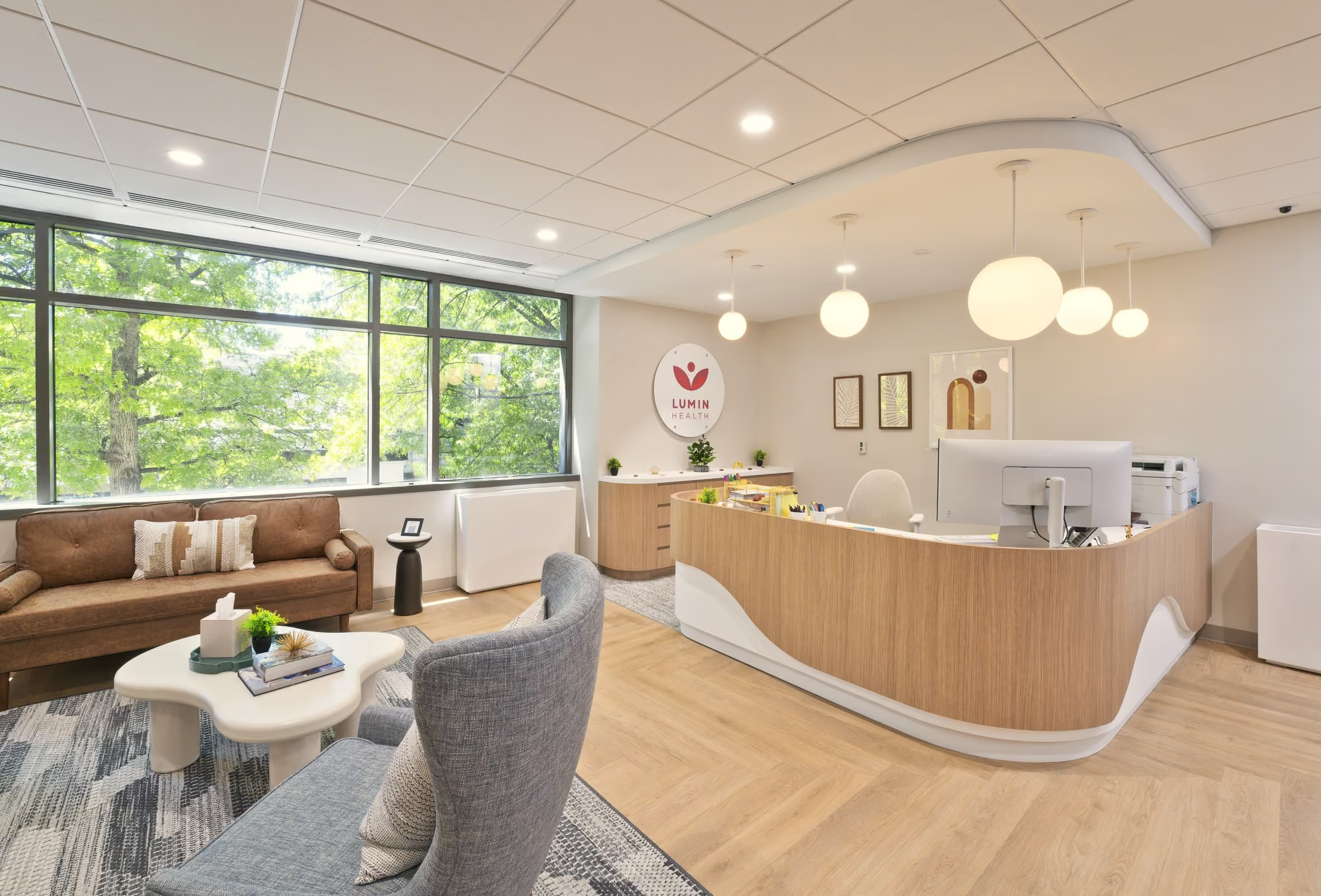
STEP 4
Your treatment course
Who you'll talk to: your treatment-room clinical team
Twice a week for the first four weeks, then once a week for the next four, then a follow-up with your psychiatrist. The full schedule is below.
THE FIRST EIGHT WEEKS
What a typical course looks like
The first month is the most frequent. Each dot is one visit of a little over two hours: a quick check-in, your treatment, then two hours of rest while our clinical team keeps an eye on you.
Week 1
Twice this week
Week 2
Twice this week
Week 3
Twice this week
Week 4
Twice this week
Week 5
Once this week
Week 6
Once this week
Week 7
Once this week
Week 8
Once this week
AFTER WEEK 8
Clinical follow-up
You and your psychiatrist review how you're doing and decide what comes next.
IF IT HELPS YOU
Maintenance
Some people continue weekly or every other week to hold onto their progress.
12
visits in the first 8 weeks
Typical Spravato course. Your care team sets your actual schedule, and IM ketamine schedules can differ.
Ready to talk it through?
Your first call is free, with our patient concierge team.
Book Free ConsultationLumin Health's comforting environment for ketamine therapy
Each session takes place in a private suite designed for focus, calm and medical rigor, with everything you need to stay comfortable: blankets, eye masks, refreshments and more. Not a hospital bay. Not a curtain.


IN THE ROOM
During your session, the time is yours
Listen to music
Bring headphones and a playlist.
Make art
Draw, color or write as you like.
Rest
Close your eyes, with a blanket and an eye mask.
Plan your ride
After treatment, you can't drive until the next day.
YOUR TEAM
Who you'll meet along the way

Patient concierge team
Your first call, insurance and scheduling. Your go-to people throughout.
Your psychiatrist or Lumin Health clinician
Meets you at intake, sets your plan and follows your progress.
Intake team
Gets your forms and records in place before you start.
Treatment-room clinical team
With you at every session, checking in and keeping you comfortable.
FAQs about ketamine treatment at Lumin Health
The questions our concierge team hears most.
Is my first call with a doctor?
No. Your free consult is with our patient concierge team. You meet your psychiatrist or Lumin Health clinician during clinical intake, the next step.
Why can't I start treatment tomorrow?
Before your first session we complete a clinical intake to make sure treatment is right for you, and we verify your insurance. Both typically happen around the same time, and we move as fast as they allow.
How often will I come in?
Typically twice a week for the first four weeks, then once a week for the next four. After that, you and your psychiatrist decide what comes next.
How long is each visit?
Plan for a little over two hours: a quick check-in, your treatment, then about two hours of rest while our clinical team monitors you.
What about insurance?
Our concierge team verifies your coverage and talks it through with you on a call, so you don't have to work it out alone.
What should I bring?
Anything that helps you settle: headphones and a playlist, a sketchbook, a comfortable layer. And a ride home.

How does ketamine therapy feel? What does relief feel like, and how do I know if ketamine or Spravato is right for me?
Lumin Health's Chief Medical Officer has put together a guide to the ketamine experience and the safeguards we put in place. Explore the articles below.

Frequently asked questions
Quick answers to your most pressing questions about ketamine therapy, depression, and the experience at Lumin Health.
How does ketamine therapy feel?


Is ketamine treatment actually safe?
How do I know if ketamine treatments and esketamine (Spravato) are working for me?
What can I do after ketamine sessions to make the most of the treatment?
Do people really feel better after ketamine therapy?
Are visits to a ketamine clinic covered by insurance?
Ketamine treatment led by psychiatrists at Lumin Health – decades of experience, thousands of treatments delivered.
Board-certified psychiatrists screen for medication interactions, monitor vitals, and coordinate with your existing care team.
We specialize in coordinating care for people with complex medical histories.
We specialize in coordinating care for people with complex medical histories.
The Lumin Health medical team
Our team of academically-affiliated psychiatrists and clinicians bring deep expertise to ketamine and esketamine treatment. As specialists in esketamine (Spravato) and ketamine therapy, we provide safe, effective care with rigorous protocols and personalized treatment plans.
The Lumin Health concierge team
Our patient concierge team handles the entire process: insurance verification, scheduling, and intake. Our team looks forward to connecting you to ketamine treatment and answering your questions about ketamine and Spravato. We handle the details so you can focus on getting better.



Lumin Health Locations
Newton Centre
10 Langley Road, Suite 200
Newton, MA 02459Cambridge (Harvard Square)
50 Church Street, 3rd Floor
Cambridge, MA 02138Woburn
300 Tradecenter Drive, Suite 3400
Woburn, MA 01801Brookline
1101 Beacon Street, Suite 6E
Brookline, MA 02446Bethesda
4825 Bethesda Avenue
Suite 200
Bethesda, MD 20814
10 Langley Road, Suite 200
Newton, MA 02459Cambridge (Harvard Square)
50 Church Street, 3rd Floor
Cambridge, MA 02138Woburn
300 Tradecenter Drive, Suite 3400
Woburn, MA 01801Brookline
1101 Beacon Street, Suite 6E
Brookline, MA 02446Bethesda
4825 Bethesda Avenue
Suite 200
Bethesda, MD 20814
Monday - Friday, 8am - 6pm
Contact