

Is Ketamine Therapy Right for Me? A Comprehensive Guide to This Innovative Mental Health Treatment
Introduction: Ketamine and Esketamine Therapy for Depression, Anxiety, OCD, PTSD, Bipolar Depression, and More
If you're living with treatment-resistant depression (TRD), chronic anxiety, post-traumatic stress disorder (PTSD), or other related conditions, finding effective relief can feel exhausting and discouraging. Traditional antidepressants and psychotherapy work for many—but not for everyone.
Recently, ketamine and esketamine (Spravato) therapy have emerged as powerful treatment options, providing rapid symptom relief even when other methods have failed. But how do you know if ketamine or esketamine (Spravato) therapy is right for you?
This user-friendly guide explores how ketamine infusion therapy, esketamine (Spravato) nasal spray, ketamine-assisted psychotherapy (KAP), and other ketamine-based treatments work, answering your most common questions and helping you make an informed decision about your mental health.
What Is Ketamine?
Ketamine was developed in the 1960s as an anesthetic to help people sleep before surgery. While high doses induce sleep, lower doses actually stimulate the brain. This unique effect led researchers in the late 1990s and early 2000s to explore low-dose ketamine as a novel antidepressant, given its potential to promote brain cell activity and change.
Therapy options include:
- Esketamine Nasal Spray (Spravato): FDA-approved, highly effective, covered by most insurance plans, convenient, and well-tolerated.[1,2]
- Intravenous (IV) Ketamine Infusions: Administered intravenously for precise dosing, ensuring proper absorption and rapid symptom relief.
- Intramuscular (IM) Ketamine Injections: Convenient with quick results, also ensuring proper dosing and absorption.
- Sublingual Ketamine Lozenges: Often used in ketamine-assisted psychotherapy (KAP), allowing therapeutic engagement during treatment.
What Is Esketamine?
Due to its unique absorption properties, esketamine can be effectively administered as a nasal spray. It is FDA-approved specifically for treatment-resistant major depressive disorder and suicidality related to depression. Esketamine offers similar benefits to ketamine infusion therapy and is generally well-tolerated, insurance-friendly, and convenient. It is rapid acting, and in clinical trials adding esketamine produced higher response and remission rates than adding a new oral antidepressant alone.[1]
Could Spravato be the right treatment option for you?
Who Can Benefit from Ketamine and Esketamine Therapy?
Treatment-Resistant Depression (TRD)
If you've tried multiple antidepressants or therapies without significant improvement, esketamine (Spravato) and ketamine therapies can provide meaningful relief. Both treatments encourage new neural pathways, significantly improving mood and resilience.
Anxiety Disorders
Ketamine, off label, has shown early promise in small studies of treatment-resistant generalized and social anxiety.[3]
Post-Traumatic Stress Disorder (PTSD)
Ketamine, off label, has reduced PTSD symptom severity in randomized trials, with benefits that lasted days to weeks after a course of treatment.[4,5]
Bipolar Depression
Ketamine, off label, can provide relief from depressive symptoms with little risk of triggering manic episodes, making it safe and effective for bipolar depression along with proper monitoring and mood stabilizing medications.[6,7]
Obsessive-Compulsive Disorder (OCD)
Ketamine has also been studied off-label in OCD, with mixed results: some people see a short-lived reduction in obsessions, others little change.[8]
How Do Ketamine and Esketamine Work?
At low doses, ketamine stimulates brain cells similarly to how exercise stimulates muscles. This leads to the release of Brain-Derived Neurotrophic Factor (BDNF), a growth hormone that encourages the formation of new connections (synapses) between brain cells, reversing brain changes associated with depression.
Ketamine and esketamine also temporarily disrupt the Default Mode Network (DMN), a brain circuit involved in memory, emotion, and social interactions, which often functions abnormally in depression.[9] As the medication clears, the DMN returns to healthier functioning.
Additionally, ketamine interacts with opioid receptors in the brain, creating mood-elevating effects similar to a "runner’s high."[10]
Is Ketamine and Esketamine Therapy Safe?
Both ketamine and esketamine are generally safe and well-tolerated when administered professionally.
Potential More Common Side Effects:
🔹 Temporary dissociation (often therapeutic)
🔹 Manageable nausea
🔹 Brief increases in blood pressure (monitored)
🔹 Rare headaches or dizziness
🔹 Sedation
Who Should Avoid Ketamine and Esketamine Therapy?
These treatments may not be suitable for individuals with:
🚫 Uncontrolled high blood pressure
🚫 History of psychosis or schizophrenia
🚫 Unmanaged substance use disorders
🚫 Certain heart conditions
A comprehensive evaluation ensures the safest treatment plan tailored to your health.
Take the Next Step with Lumin Health
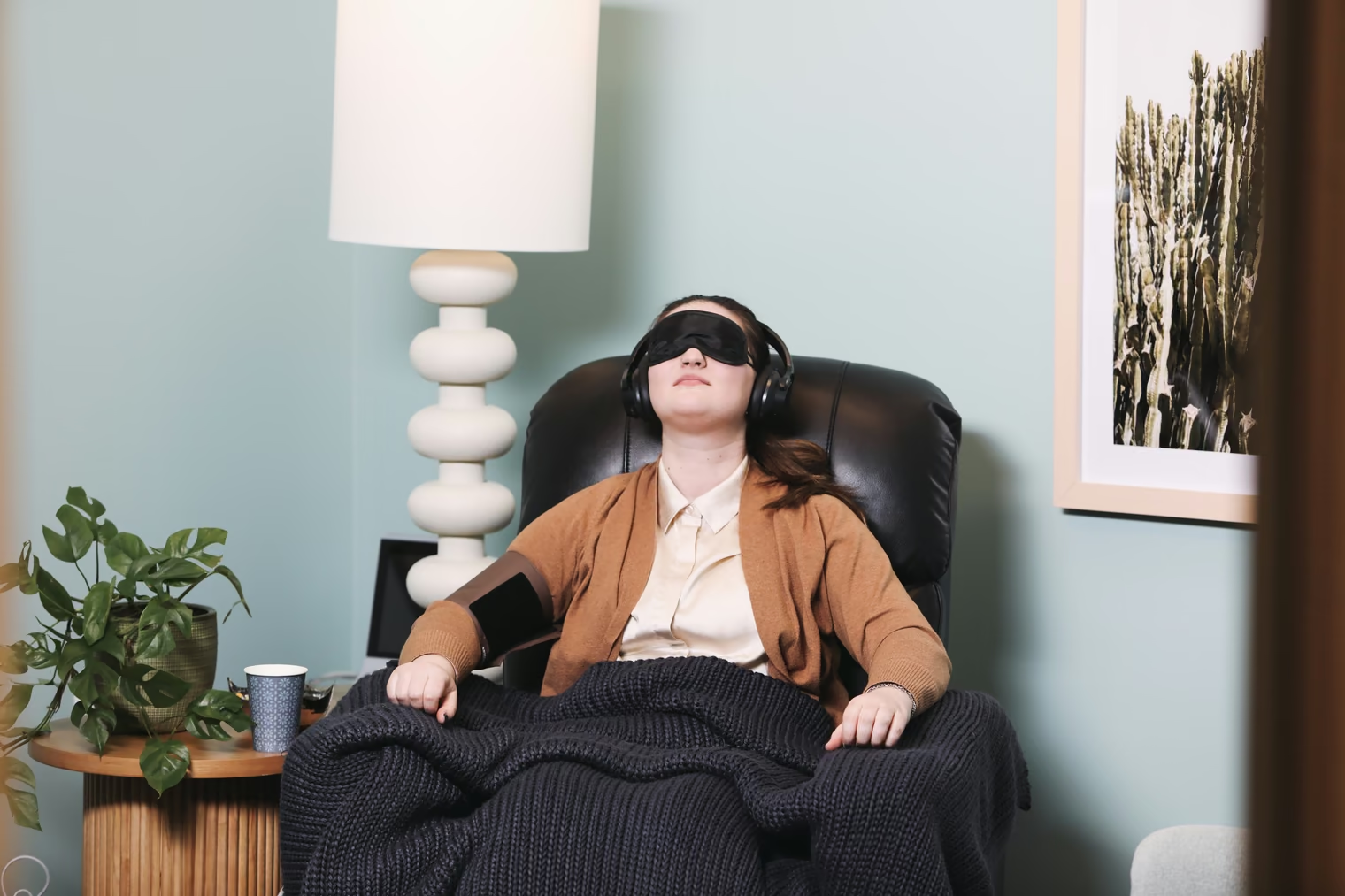
At Lumin Health, our medical experts are dedicated to your mental well-being and provide compassionate, personalized ketamine and esketamine (Spravato) treatments tailored to your unique needs. All clinics are staffed with psychiatrists along with psychiatric nurse practitioners, physician assistants, nurses, social workers, and medical assistants. They work closely with your existing care providers to ensure seamless, comprehensive support. Additionally, our serene environment ensures a comfortable, supportive treatment experience.
Schedule a free consultation with our specialists or call us at 1-617-863-8810 to explore whether ketamine therapy or esketamine treatment is right for you and start your journey toward transformative healing with Lumin Health.
References
- Popova V, Daly EJ, Trivedi M, et al. Efficacy and Safety of Flexibly Dosed Esketamine Nasal Spray Combined With a Newly Initiated Oral Antidepressant in Treatment-Resistant Depression: A Randomized Double-Blind Active-Controlled Study. Am J Psychiatry. 2019;176(6):428-438. PubMed
- Fu DJ, Ionescu DF, Li X, et al. Esketamine Nasal Spray for Rapid Reduction of Major Depressive Disorder Symptoms in Patients Who Have Active Suicidal Ideation With Intent: Double-Blind, Randomized Study (ASPIRE I). J Clin Psychiatry. 2020;81(3). PubMed
- Glue P, Medlicott NJ, Harland S, et al. Ketamine's dose-related effects on anxiety symptoms in patients with treatment refractory anxiety disorders. J Psychopharmacol. 2017;31(10):1302-1305. PubMed
- Feder A, Parides MK, Murrough JW, et al. Efficacy of intravenous ketamine for treatment of chronic posttraumatic stress disorder: a randomized clinical trial. JAMA Psychiatry. 2014;71(6):681-8. PubMed
- Feder A, Costi S, Rutter SB, et al. A Randomized Controlled Trial of Repeated Ketamine Administration for Chronic Posttraumatic Stress Disorder. Am J Psychiatry. 2021;178(2):193-202. PubMed
- Zarate CA Jr, Brutsche NE, Ibrahim L, et al. Replication of ketamine's antidepressant efficacy in bipolar depression: a randomized controlled add-on trial. Biol Psychiatry. 2012;71(11):939-46. PubMed
- Grunebaum MF, Ellis SP, Keilp JG, et al. Ketamine versus midazolam in bipolar depression with suicidal thoughts: A pilot midazolam-controlled randomized clinical trial. Bipolar Disord. 2017;19(3):176-183. PubMed
- Bloch MH, Wasylink S, Landeros-Weisenberger A, et al. Effects of ketamine in treatment-refractory obsessive-compulsive disorder. Biol Psychiatry. 2012;72(11):964-70. PubMed
- Evans JW, Szczepanik J, Brutsché N, et al. Default Mode Connectivity in Major Depressive Disorder Measured Up to 10 Days After Ketamine Administration. Biol Psychiatry. 2018;84(8):582-590. PubMed
- Williams NR, Heifets BD, Blasey C, et al. Attenuation of Antidepressant Effects of Ketamine by Opioid Receptor Antagonism. Am J Psychiatry. 2018;175(12):1205-1215. PubMed
Take the first step today.
If you or a loved one in Massachusetts and the greater Washington DC/Maryland area is struggling with depression or anxiety, Lumin Health's team of experts is ready to help. Book a free 20-minute consultation to learn if ketamine therapy could be the breakthrough you've been looking for.
Available in Massachusetts and the greater Washington DC/Maryland area.
Frequently Asked Questions
Is ketamine therapy right for me?
It may be worth exploring if you've tried multiple antidepressants or psychotherapy without lasting relief from depression, anxiety, PTSD or related conditions. Ketamine and esketamine (Spravato) can offer rapid symptom relief through a different biological pathway than standard medications. A full evaluation is the only way to know for sure, since some medical and psychiatric histories need extra care.
Which mental health conditions might ketamine or esketamine treatment help?
People with treatment-resistant depression who haven't found relief after multiple antidepressants or therapies are the clearest fit. Off-label ketamine has also shown early promise in small studies for anxiety, PTSD, and bipolar depression, with mixed results for OCD. Response varies by condition and person, so a full evaluation helps set realistic expectations.
What is the difference between ketamine and esketamine (Spravato)?
Esketamine (Spravato) is FDA-approved specifically for treatment-resistant depression and major depression with suicidal thoughts, and it's delivered as a nasal spray. Ketamine is used off-label for depression and other conditions, and at Lumin Health it's given as an intramuscular (IM) injection. Both work on similar brain pathways, and their side effect profiles are largely the same.
What does ketamine or esketamine treatment feel like?
Many patients describe temporary dissociation that often feels therapeutic, along with possible nausea, brief increases in blood pressure, or mild sedation. These effects are expected and monitored, and they typically fade within the visit. Your team reviews your health history beforehand to build a safe, individualized plan.