


The Patient’s Seat: Sharing Control with Ketamine’s Psychedelic Effects
Many patients describe ketamine therapy as flying with a co-pilot. You’re not steering every turn — but you’re not a passenger either. You stay in partnership with the experience while our team manages dose, route, and safety. This guide offers simple ways to prepare, ground, and debrief so ketamine treatment — including esketamine (Spravato) — supports healing on your terms.
What you might feel: expectable sensations
Most sessions follow a brief, contained arc. Common experiences include:
- Time shift & soft focus. Minutes can feel longer or shorter; attention turns inward.
- Body distance. A sense of observing the body rather than living inside it (dissociation).
- Perception shifts. Music gains dimension; colors or patterns may feel different.
- Thought looseness. Rigid loops soften; self-talk grows quieter or kinder.
Not everyone has visuals. You don’t need them for ketamine for depression to help. If you’re receiving Spravato, expect a similar inward focus with monitoring in a REMS-governed setting.
Grounding skills you can use in the ketamine treatment sessions
You keep participatory control. Lumin Health keeps clinical watch. The simple tools below can help people in acute scenarios of discomfort:
- Breath timing: Inhale 4, hold 2, exhale 6 — repeat for a few cycles.
- Anchor phrase: A short intention you can remember (e.g., “I can let this unfold.”).
- Music shift: I can pause, lower volume, or swap to simpler tracks on request.
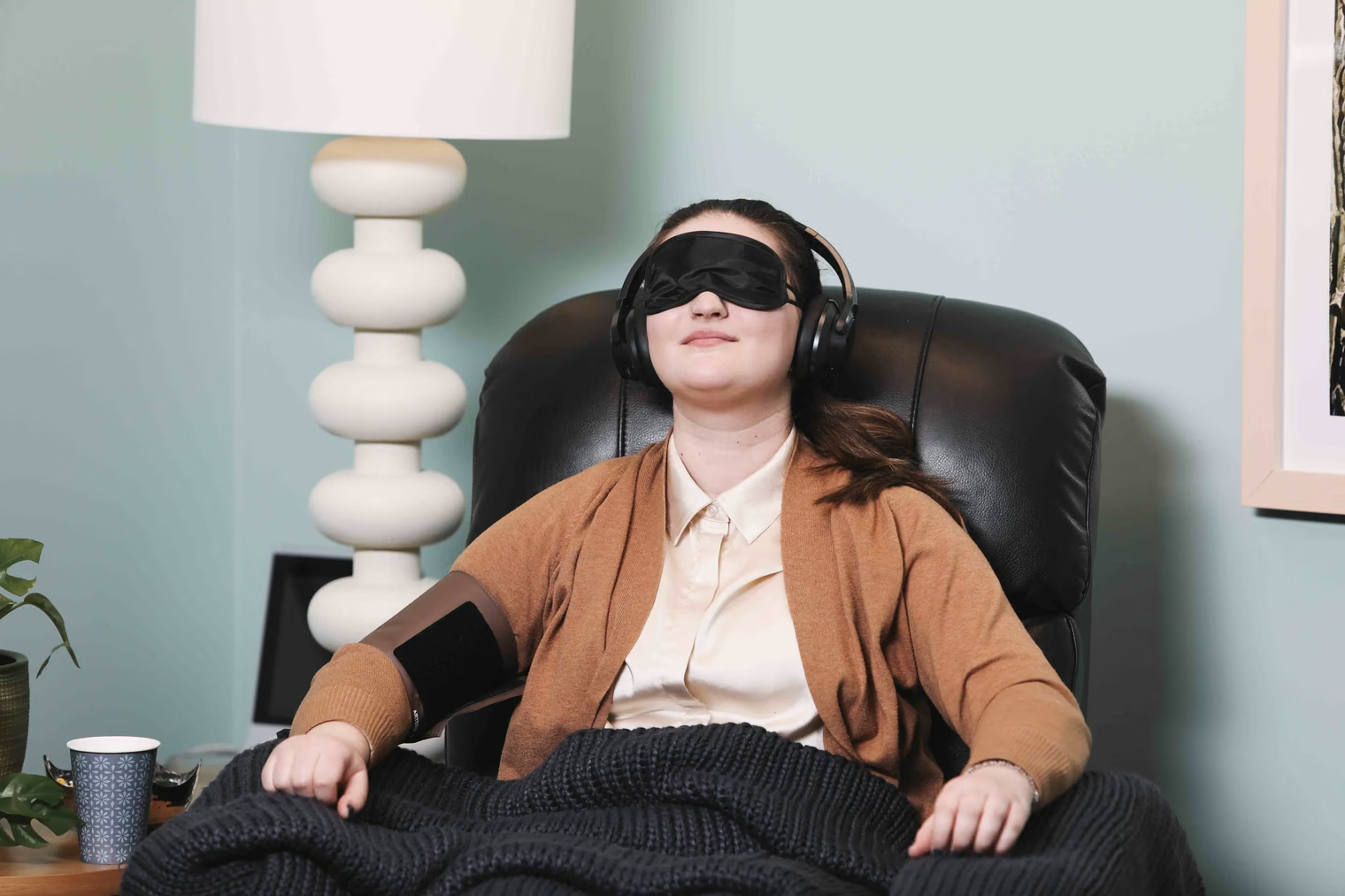
- Posture & touch: Adjust the chair or blanket, place your hand on your chest or abdomen, feel the chair.
- Eyes covered: An eye mask reduces input and supports the inward quality of ketamine treatment.
If intensity rises, we’ll slow the pace, coach gently, and remain close. Most difficult moments pass in short order, and your expert team of Lumin Health clinicians is always close by.
When Lumin Health adjusts the ketamine or esketamine (Spravato) dose and why we do so
Your plan is individualized. We may adjust when:
- Too light: You feel flat or distracted; we can consider dose, route, or timing changes.
- Too intense: Anxiety climbs or sensations feel overwhelming; we can lower dose, lengthen ramp-up, or modify certain traits of the environment.
- Not enough benefit: We revisit frequency, coordination with psychotherapy, and whether off-label ketamine therapy or Spravato offers a better clinical fit.
You don’t have to decide alone. We track your response over time and adapt together.
Make the 72 hours after ketamine therapy count
After dosing, many patients enter a neuroplasticity window — a short period when new learning may “stick” more readily. Small steps are best:
- Journaling prompts: What felt kinder today? What felt newly possible? What one action aligns with that?
- Visits to your existing care team: If you have an existing care team, consider scheduling inside the window. Our team can help coordinate.
- Tiny commitments: Choose one value-aligned action (send the email, take the 10-minute walk, prepare one meal). Repetition matters more than size.
A calmer way to move through change at Lumin Health
You don’t need perfect control to treat your mental health conditions — just enough partnership to feel safe. Whether you choose off-label ketamine therapy or esketamine in a Spravato program, Lumin Health will help you prepare, ground in session, and use the next 72 hours well. For many pursuing ketamine for depression, that shared control is what makes change feel possible — and sustainable.
You've read the science. Now take the next step.
Lumin Health provides safe, expert-administered ketamine and Spravato treatment across Massachusetts and the greater Washington DC/Maryland area. Your journey starts with a free, no-commitment intro call.
Available in Massachusetts and the greater Washington DC/Maryland area.
Frequently Asked Questions
What if hard feelings come up during a ketamine or Spravato session?
That can happen, especially early in treatment. Your team will normalize it, slow the pace, and use grounding tools, adjusting the dose or offering support if needed. Afterward, you can plan how to process what surfaced, often with your own therapist during the days that follow.
Can I stay on my current medications during ketamine treatment?
Often yes, sometimes with adjustments. Many medications are compatible with ketamine treatment and Spravato, though some combinations call for caution or timing changes, so don't stop or change prescriptions on your own. Your care team reviews your full list in advance and coordinates with your prescribers if needed.
How do clinicians decide on and adjust my ketamine dose over time?
Your plan is individualized and adjusted based on how you respond. If a session feels too light, your team may consider the dose, route, or timing; if it feels too intense, they can lower the dose or slow the pace. If benefit is limited, they'll revisit frequency and whether a different option might fit better.
What does a ketamine therapy session feel like?
Sessions often involve a shift in your sense of time, a feeling of distance from your body, and thoughts or self-talk that feel looser and quieter than usual. Not everyone has visual effects, and you don't need them for treatment to help. If you're receiving Spravato, expect a similar inward focus with monitoring throughout.