


What to Expect at Your First Ketamine Therapy or Spravato Appointment
Ketamine and esketamine (Spravato) have been shown in clinical trials to act rapidly, often within days, for treatment-resistant depression[1,2], yet due to lots of factors, including decades of stigma and misuse stories, people still wonder about the experience and may approach it with some anxiety. Let’s break down common misconceptions and work towards a clearer understanding of how the ketamine therapy program at Lumin Health can really impact your mental health.
Why People Feel Anxious Before Ketamine Treatment
Many patients describe feeling nervous before their first ketamine therapy or Spravato treatment. This makes sense: you’re stepping into something unfamiliar, often after years of disappointment with other treatments. You may have heard about the psychedelic-like effects of the medicine and wonder how you’ll respond. At Lumin Health, we hear patients ask the same core questions: What if I lose control? What if I have a bad trip? How do I know it’s safe?
Fear of a “bad trip” — what it really means
The phrase “bad trip” is borrowed from recreational drug use, and in a clinical setting carries much of the same meaning. Some patients feel anxious when the medicine shifts their perspective, brings up an uncomfortable thought, or creates a sense of unfamiliarity with themselves. These moments are temporary and rare, but they carry weight because they touch on our deepest sense of safety and control.
Sharing control with the ketamine experience
Lumin Health’s Chief Medical Officer — Dr. Ben Yudkoff — often describes ketamine as a “co-pilot.” You consent to the medicine and once it’s active you share control with it. This isn’t about losing agency — it’s about trusting that the experience may show you something meaningful, even if you can’t steer every moment . For many, reframing ketamine’s contribution to the experience helps reduce anxiety: you’re not out of control, you’re in partnership with ketamine in the experience - both in terms of the experience's nature and how you respond to the experience.
How Lumin Health’s clinical setting lowers risk of Spravato and ketamine therapy generating a “bad trip”
Concerns about comfort are valid. That’s why ketamine therapy at Lumin Health is conducted in private, medically supervised rooms, led by experts in Spravato and ketamine treatment. Blood pressure and breathing are monitored throughout, and staff are present to offer reassurance or medications for side effects like nausea or anxiety.[3] This combination of medical oversight and emotional containment is what makes ketamine therapy safe in practice. Everyone at Lumin Health is trained in helping people through difficult moments and, perhaps more importantly, giving people the tools and information to make a positive experience as likely as possible (which it is for the vast majority of people for the vast majority of treatments).
Practical Prep for Ketamine and Spravato: The Night Before and Day Of
Clothing, fasting, and arrival timing
We ask you to avoid food for two hours before Spravato and ketamine treatment and for 30 minutes afterwards. Sometimes the medications can upset the belly and it's best to come in on an empty stomach. We also ask you to avoid alcohol for at least 24 hours before ketamine and esketamine treatment. Comfortable clothing is encouraged — think soft layers that allow you to relax. Plan to arrive a bit early so you don’t feel rushed.
Headphones, eye mask, and intention-setting
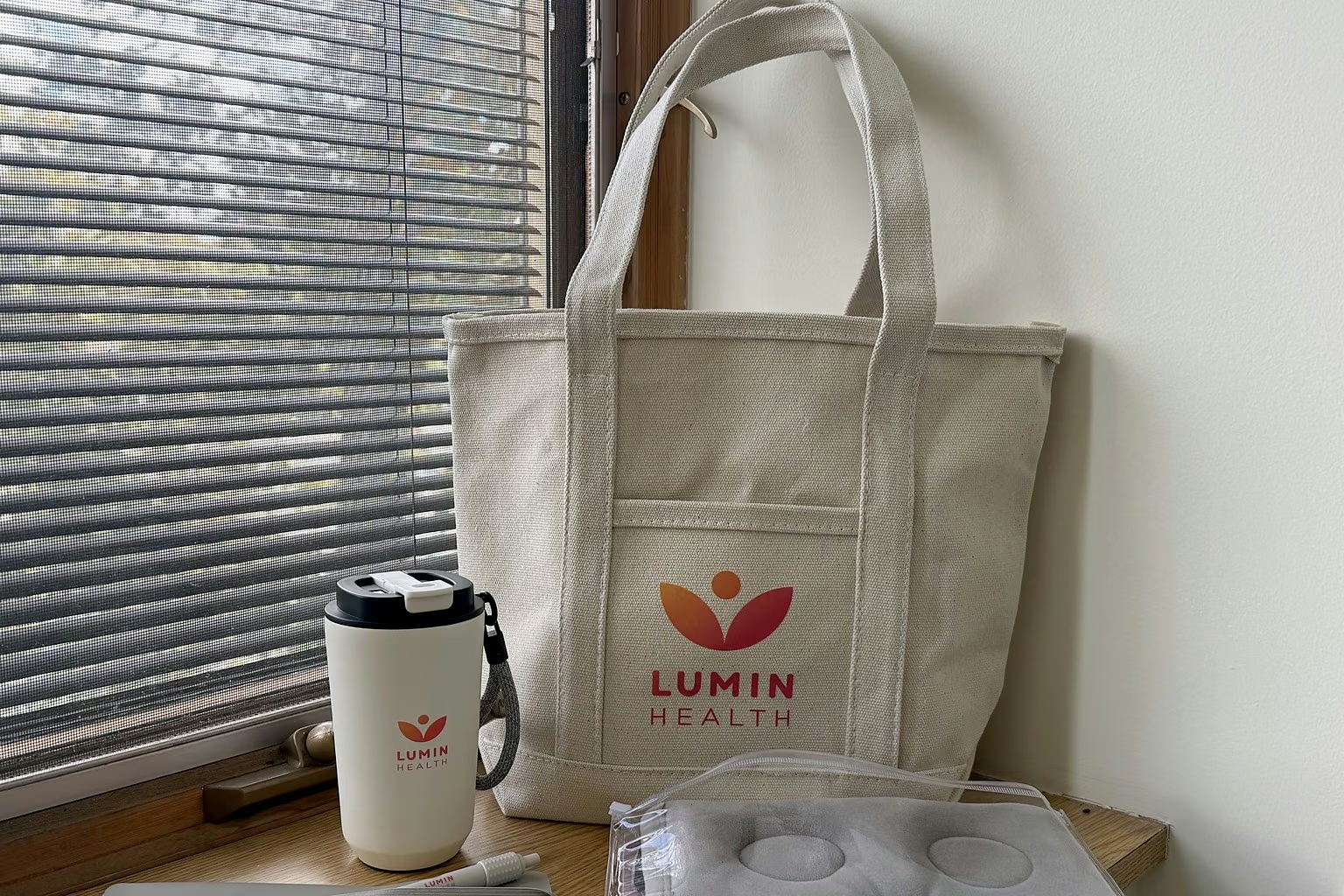
Many people bring headphones for music and an eye mask to reduce external stimulation. These simple tools can help you lean into the experience. Setting an intention — not as a rigid expectation, but as a guiding thought, even something as seemingly simple as being willing to be curious — can also shape the session. Lumin Health will also provide headphones and eyemasks to anyone who either does not have them or forgot them at home.
Bringing a support person: how to brief them
Some patients choose to bring a trusted friend or family member. If you do, it helps to brief them that their role is not to direct your experience, but to be a calm presence. The Lumin Health team also welcomes them into the process, offering context so they can be the best support possible. Don’t hesitate to let your clinicians know if you’re interested in this and we can help sort out the logistics.
Inside the Dosing Room: The Lumin Health Experience
Private rooms and one-on-one care
At Lumin Health, treatments happen in private, comfortable spaces — not in large group rooms. This allows you to feel safe, grounded, in a private setting, and cared for without distraction.
Monitoring, medications, and safety practices
Throughout the session, your clinician monitors vital signs and remains nearby. If side effects arise — such as nausea, dizziness, or brief anxiety — supportive care and, when needed, medications are available.
Hospitality that supports healing
Beyond safety, healing is supported by hospitality. At Lumin Health, you’re greeted warmly, offered comfort items, and guided gently through each step. Patients often describe the environment as part clinic, part sanctuary.
Preparing for Ketamine Therapy at Lumin Health
Feeling anxious before your first ketamine or Spravato treatment is normal. By preparing thoughtfully — choosing comfortable clothing, setting intentions, and knowing what to expect — you give yourself the best chance of feeling at ease. And with Lumin Health’s combination of medical monitoring, private care, and genuine hospitality, you can approach your first session not with fear, but with curious openness.
Ketamine therapy isn’t about giving up control. It’s about sharing it in a way that may open doors to healing you haven’t yet found.
References
- Zarate CA Jr, Singh JB, Carlson PJ, et al. A randomized trial of an N-methyl-D-aspartate antagonist in treatment-resistant major depression. Arch Gen Psychiatry. 2006;63(8):856-64. PubMed
- Popova V, Daly EJ, Trivedi M, et al. Efficacy and Safety of Flexibly Dosed Esketamine Nasal Spray Combined With a Newly Initiated Oral Antidepressant in Treatment-Resistant Depression: A Randomized Double-Blind Active-Controlled Study. Am J Psychiatry. 2019;176(6):428-438. PubMed
- Riva-Posse P, Reiff CM, Edwards JA, et al. Blood pressure safety of subanesthetic ketamine for depression: A report on 684 infusions. J Affect Disord. 2018;236:291-297. PubMed
You've read the science. Now take the next step.
Lumin Health provides safe, expert-administered ketamine and Spravato treatment across Massachusetts and the greater Washington DC/Maryland area. Your journey starts with a free, no-commitment intro call.
Available in Massachusetts and the greater Washington DC/Maryland area.
Frequently Asked Questions
How do I prepare for my first ketamine therapy or Spravato session?
Avoid food for 2 hours before your session and alcohol for at least 24 hours beforehand. Wear comfortable clothing, plan to arrive a little early, and consider bringing headphones or an eye mask to reduce outside stimulation. Setting a simple, open intention, like being willing to feel curious, can also help.
What should I expect during my first ketamine therapy session?
You'll be in a private, medically supervised room where your clinician monitors your blood pressure and stays nearby throughout. If side effects like nausea, dizziness, or brief anxiety come up, supportive care and medication are available. Afterward, you'll have an observation period before you're cleared to leave.
Should I eat before ketamine or Spravato treatment?
Yes, you should come in on an empty stomach. We ask you to avoid food for 2 hours before treatment and for 30 minutes afterward, since the medication can sometimes upset your stomach.
What if I have a difficult moment or a 'bad trip' during ketamine therapy?
Difficult moments are temporary and rare, and your care team is trained to help you through them. Blood pressure and breathing are monitored throughout, and staff can offer reassurance, grounding support, or medication for discomfort like nausea or anxiety. Sharing control with the experience, rather than fighting it, is part of what makes it feel manageable.