

A Guide to Spravato® (Esketamine) and Ketamine Therapy for Depression
Understanding advanced options for treatment-resistant depression is crucial. Spravato® (esketamine) is an FDA-approved nasal spray for adults with treatment-resistant depression or major depression with suicidal thoughts. Off-label ketamine therapy is an evidence-informed option, typically administered intravenously but administered as intramuscular ketamine at Lumin Health, used for similar conditions based on extensive research.
Why Your Brain Isn't Broken – But It May Be Stuck
For many individuals navigating persistent depression, the feeling is less about a fundamental defect and more about being trapped in a rigid cycle of thought. Your brain isn't broken; it may be stuck. This is often linked to the brain's Default Mode Network (DMN), a collection of brain regions that are active when we are at rest or introspective.[1] In depression, the DMN can become overactive and rigid, reinforcing negative thought patterns and a diminished sense of self.[1,2]
The goal of advanced psychiatric treatments is not to erase who you are, but to gently disrupt these rigid patterns. This is where the concept of neuroplasticity—the brain's ability to form and reorganize synaptic connections—becomes paramount. Treatments like ketamine therapy aim to create a window of enhanced neuroplasticity, making the brain more receptive to change and new, healthier patterns of thought and behavior.
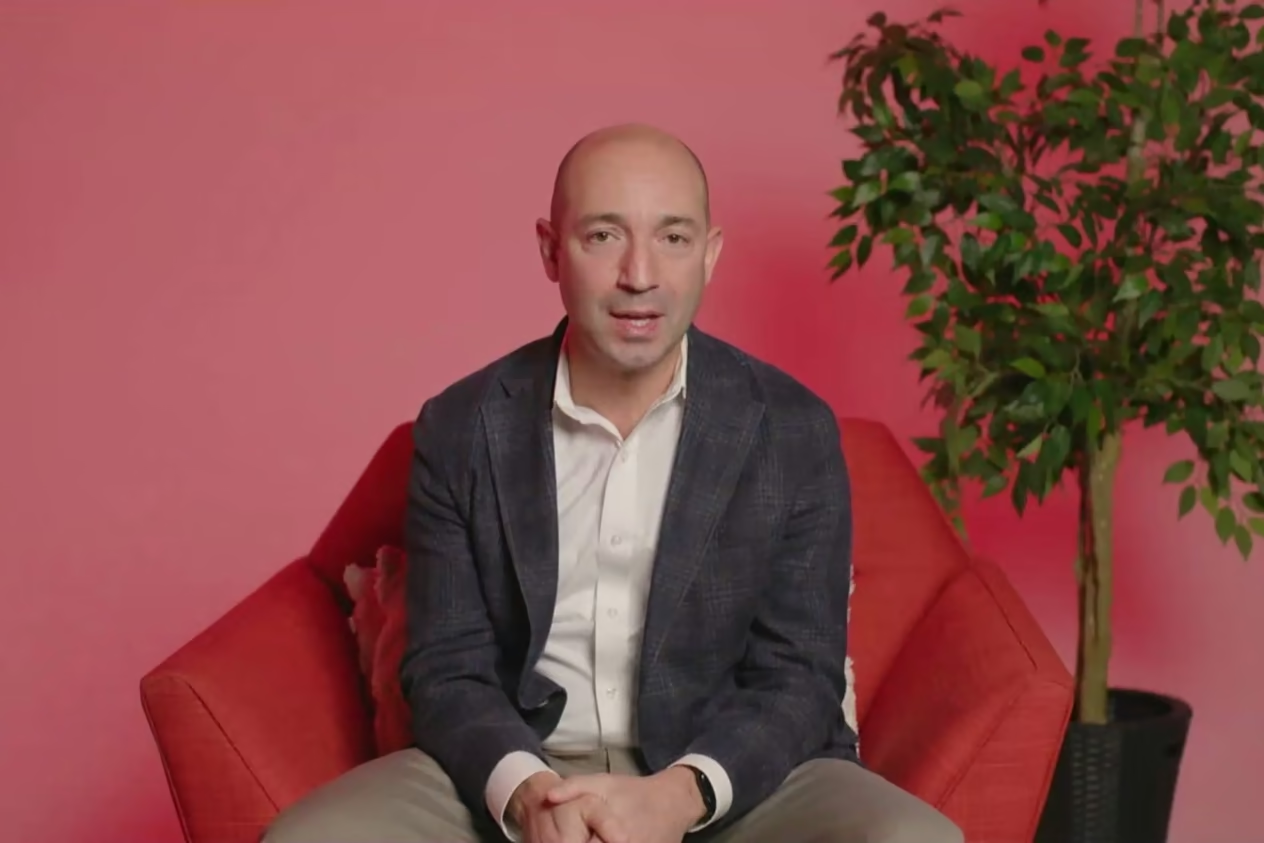
Dr. Ben Yudkoff, Chief Medical Officer at Lumin Health, states, "Our role is not to 'fix' a person, but to create the biological conditions where they can heal themselves. We are facilitating a process that allows a person’s own mind to find a more flexible and resilient state, often after years of feeling stuck."
Differentiating the Options: Spravato vs. Ketamine Treatment
While often discussed together, it is clinically and legally essential to understand the distinction between FDA-approved Spravato® and off-label ketamine. At Lumin Health, our psychiatrist-led team is meticulous about clarifying these differences so you can make an informed decision.
Spravato® (Esketamine): The FDA-Approved Pathway
Esketamine is one of the two molecules that make up the ketamine compound.[3] It has undergone rigorous clinical trials, leading to its specific approval by the FDA.[4]
Off-Label Ketamine Therapy: An Evidence-Informed Alternative
The term "off-label" simply means a medication is being used for a condition other than the one for which it received FDA approval. This is a common and legal practice in medicine when there is sufficient scientific evidence to support its use. The use of ketamine for depression falls into this category, backed by decades of research.
The Importance of a Personalized, Psychiatrist-Led Environment
Choosing to explore these advanced treatments is a significant step. It's a decision that deserves to be met with personalized, attentive, and deeply expert care—not the feeling of being a number in a large, impersonal system. At a specialized practice, the focus is entirely on your safety, comfort, and the therapeutic potential of the experience.
A common reflection we hear is the relief of feeling truly seen and heard. One individual shared, "I was so anxious about the process, worried I'd be judged or misunderstood. Instead, the team knew my history and sat with me. It wasn't just a procedure; it was care."
This level of bespoke support, from medical screening to post-session psychotherapy, is what distinguishes a dedicated mental health organization from a more generalized setting. The academically-affiliated leadership at Lumin Health ensures every protocol is grounded in the latest evidence and a profound respect for the patient's journey.
An Invitation to Explore Relief
Making a decision about your mental health care is deeply personal. For those in Massachusetts, our team at Lumin Health is here to provide guidance. For those outside our immediate area, we hope this guide serves as a valuable educational resource to help you navigate your options with clarity and confidence.
If you feel stuck in cycles of depression that haven't responded to other treatments, meaningful relief may be possible. We would be grateful to walk with you towards understanding whether an advanced approach may be a fit for your journey.
References
- Whitfield-Gabrieli S, Ford JM. Default mode network activity and connectivity in psychopathology. Annu Rev Clin Psychol. 2012;8:49-76. PubMed
- Sheline YI, Barch DM, Price JL, et al. The default mode network and self-referential processes in depression. Proc Natl Acad Sci U S A. 2009;106(6):1942-7. PubMed
- Bonaventura J, Lam S, Carlton M, et al. Pharmacological and behavioral divergence of ketamine enantiomers: implications for abuse liability. Mol Psychiatry. 2021;26(11):6704-6722. PubMed
- Vekhova KA, Namiot ED, Jonsson J, et al. Ketamine and Esketamine in Clinical Trials: FDA-Approved and Emerging Indications, Trial Trends With Putative Mechanistic Explanations. Clin Pharmacol Ther. 2025;117(2):374-386. PubMed
- Singh JB, Fedgchin M, Daly EJ, et al. A Double-Blind, Randomized, Placebo-Controlled, Dose-Frequency Study of Intravenous Ketamine in Patients With Treatment-Resistant Depression. Am J Psychiatry. 2016;173(8):816-26. PubMed
You've read the science. Now take the next step.
Lumin Health provides safe, expert-administered ketamine and Spravato treatment across Massachusetts and the greater Washington DC/Maryland area. Your journey starts with a free, no-commitment intro call.
Available in Massachusetts and the greater Washington DC/Maryland area.
Frequently Asked Questions
What is the difference between esketamine and off-label ketamine?
Esketamine (Spravato) is FDA-approved for adults with treatment-resistant depression and major depression with suicidal thoughts, and is one of the two molecules that make up the ketamine compound. Off-label ketamine uses the full compound for similar conditions, based on decades of supporting research. At Lumin Health, care is delivered as esketamine (Spravato) nasal spray or intramuscular ketamine, never intravenous ketamine.
Is a 'bad trip' a common risk during ketamine or Spravato treatment?
Difficult, disorienting experiences are usually associated with unsupervised recreational use, not supervised treatment. In a clinical setting, your dose is medically determined, the environment is calm, and you're monitored by medical professionals throughout. Feeling disconnected from your body is expected and part of the therapeutic action, and your care team stays present to help you feel safe.
How does psychotherapy fit into ketamine or esketamine treatment?
The medication creates a temporary window of heightened neuroplasticity, when your brain may be more open to change. Many people find the lasting benefit comes from pairing that window with psychotherapy or their own self-guided practice, done independently of Lumin Health. This helps translate what comes up during treatment into new, steadier habits.
What is the Default Mode Network and how does it relate to depression?
The Default Mode Network is a group of brain regions active when you're at rest or reflecting inward. In depression, it can become overactive and rigid, reinforcing negative thought patterns. Treatments like ketamine therapy aim to create a window of enhanced neuroplasticity that may make the brain more receptive to new, healthier patterns.