

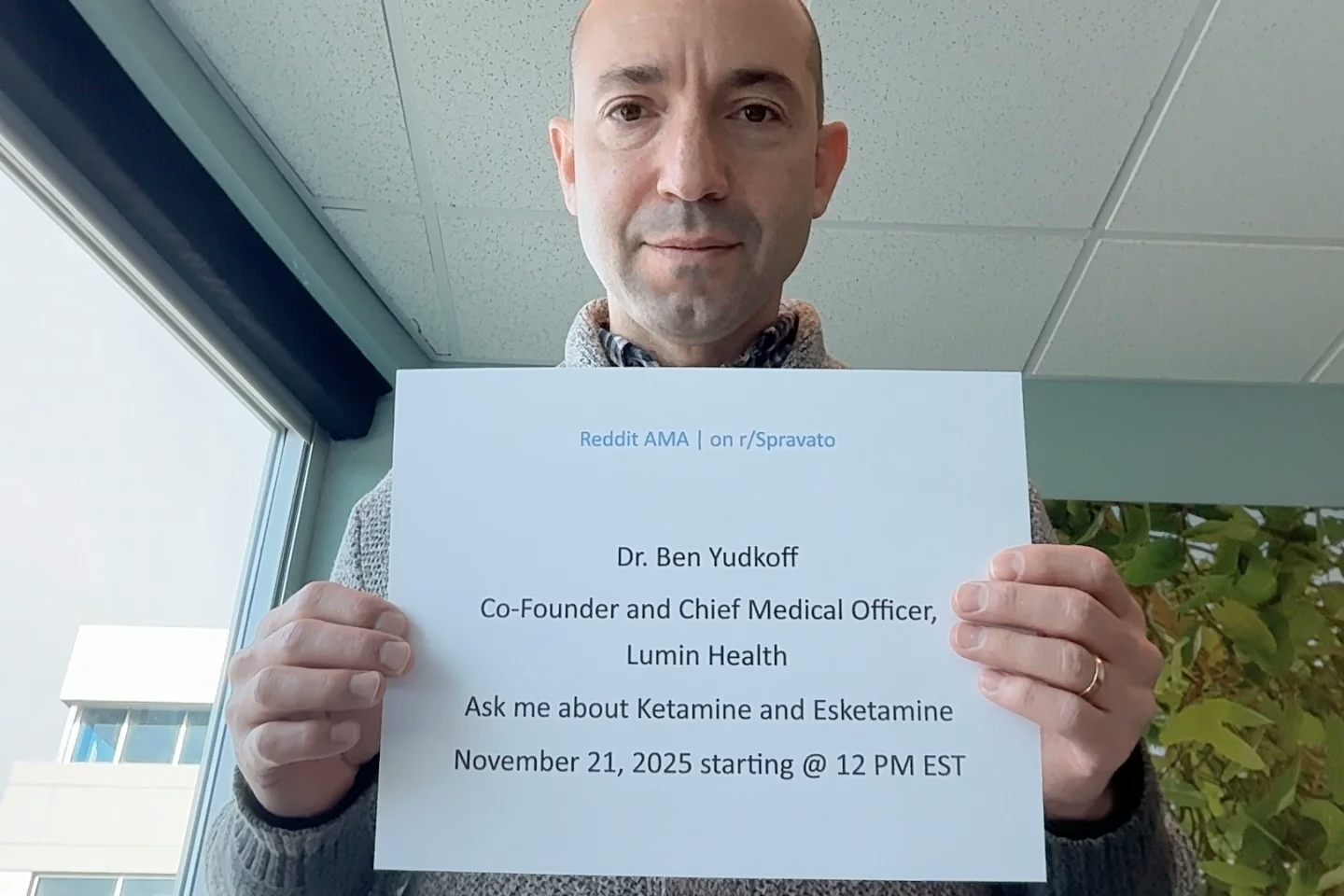
Dr. Ben Yudkoff, Co-Founder and Chief Medical Officer at Lumin Health, hosted a Reddit AMA on the Spravato community on November 21, 2025. The below blog post is a recap of one of the questions presented on that AMA, syndicated to the Lumin Health blog in the event that it answers any questions about ketamine therapy, Spravato treatment, or general concerns you may have about treatment.
Read the full AMA on r/Spravato here
Don’t hesitate to get in touch with us if you’re interested in learning more about ketamine for depression at Lumin Health. Thank you once again to the moderators and community members for facilitating such an engaging discussion.
Sissysweeps asks
Anything diet or nutrition wise that could help the Spravato (ketamine) work better/faster/longer?
Answer:
This is a fantastic question and one that comes up a lot. There's a lot of participation a person can do to help the efficacy of ketamine or esketamine. This can involve anything from cardiovascular exercise 20 minutes per day, a regular sleep pattern, good psychotherapy, and of course, diet. There are no studies I'm aware of that looks specifically at a diet and ketamine that draws a connection between something that can push Spravato's efficacy along. Having said that, there are diets that psychiatrists recommend that can help more globally with mental health. I'm going to hone in my response to talking about two, in particular, that actually may touch some of the same mechanisms of action of Spravato. Firstly, there's a diet out there called the "ketogenic diet." This diet prioritizes caloric reliance on foods that are higher in fats and proteins and moves away from carbohydrate-rich diets. There is a good amount of research about the psychologically positive impacts of a ketogenic diet. Firstly, the ketogenic diet can modulate glutamate - which is one of the primary mechanisms of action of esketamine. While the direction of how it modulates glutamate is somewhat complicated, there is overlap between what ketamine does how keto works.
The ketogenic diet can also modulate inflammatory response. When our body is flushed with inflammation, one of the things that it does is it activates brain cells involved in immune responses. In this activation, these brain cells involved in immune responses not only target things like infections, but sometimes they can even target the connections we have between brain cells called "synapses." By decreasing inflammation, the keto diet might be able to reduce some of this activation which may help these brain connections stick around more durably. Importantly, Spravato (esketamine) also helps produce and maintain these synapses.
The ketogenic diet or really any anti-inflammatory diet, including ones that are high in omega-3 fatty acids, may decrease the proclivity of the brain to prune the synapses that ketamine is generating. There are probably other diets that are also relevant. The other diet to know about is the Mediterranean diet which also inclines towards an anti-inflammatory effect - potentially augmenting the Spravato.
The upshot here is that while there are no specific diets that have been tied into enhancing the benefit of Spravato, there has been research in how diets impact general brain health and in particular the Mediterranean diet and the ketogenic diet both have downstream effects that could be supportive of Spravato (my opinion only).
Find out if ketamine therapy is covered by your plan.
Lumin Health accepts most major insurance providers for Spravato treatment in Massachusetts and the greater Washington DC/Maryland area. Use our free tool to check your coverage instantly — no forms, no phone calls.
Available in Massachusetts and the greater Washington DC/Maryland area.