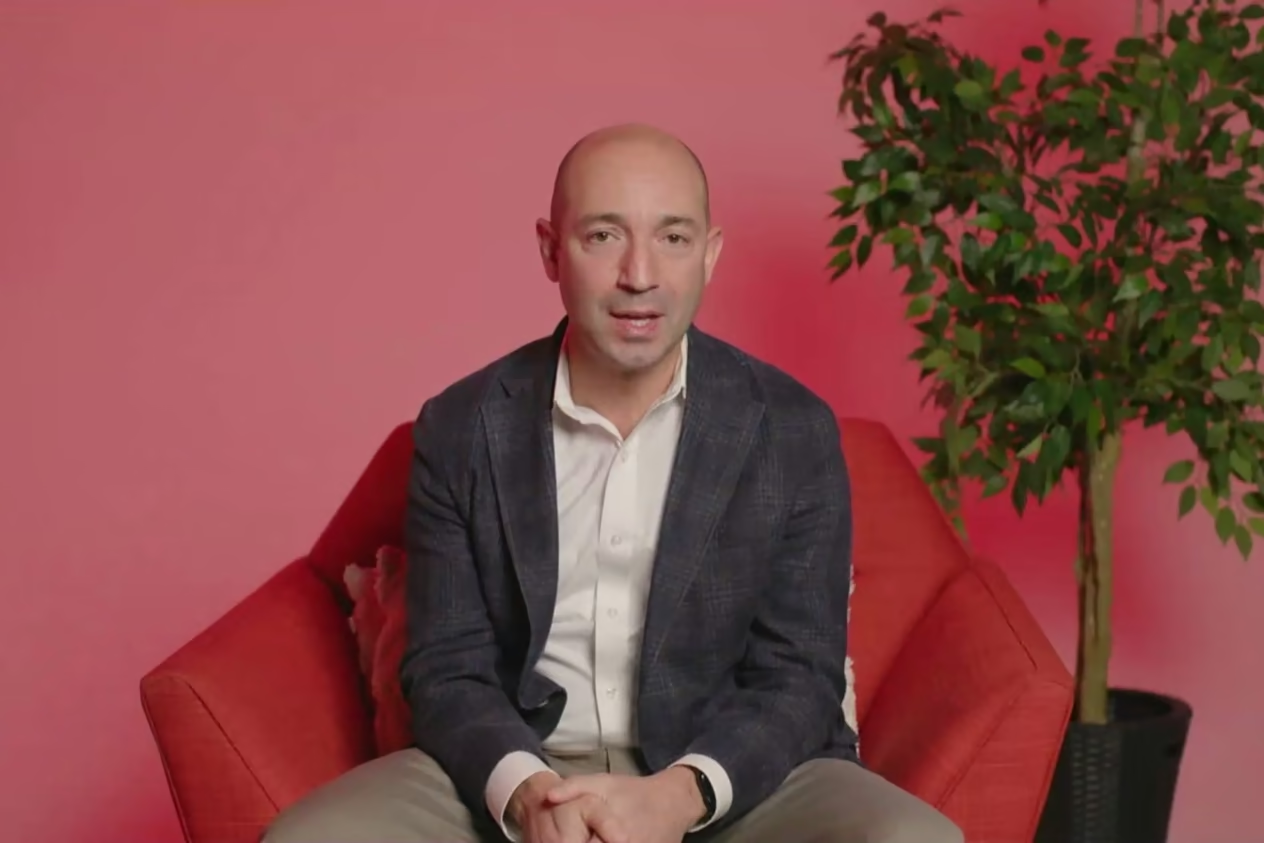


Dr. Ben Yudkoff, Co-Founder and Chief Medical Officer at Lumin Health, hosted a Reddit AMA on r/TherapeuticKetamine community on March 6th, 2026. The below blog post is a recap of one of the questions presented on that AMA, syndicated to the Lumin Health blog in the event that it answers any questions about ketamine therapy, Spravato treatment, or general concerns you may have about treatment.
Read the original Reddit AMA here
Don’t hesitate to get in touch with us if you’re interested in learning more about ketamine for depression at Lumin Health. Thank you once again to the moderators and community members for facilitating such an engaging discussion.
JuneJabber asks:
How can a potential patient evaluate whether a particular clinic has the appropriate expertise to do effective ketamine therapy?
Answer from Dr. Ben Yudkoff, Co-Founder and Chief Medical Officer of Lumin Health:
JJ, I love this question. The first thing that I would assess is whether or not the clinicians at the clinic have mental health treatment experience. This is not to say that the ability to provide ketamine can't be provided by someone who doesn't have mental health treatment experience, but the benefits of having a mental health provider are innumerable: lots of people who come in with depression may find themselves in positions of not liking themselves which can put certain kinds of energies in between people. It takes a certain kind of expertise to recognize when it's happening and to know what the right questions are to ask to help a person feel comfortable. Diagnostics can be complicated: symptoms of depression can occur in many psychiatric conditions and, in my experience, many people receive diagnoses that are inaccurate – having an experienced clinician run through a psychiatric history to get a clear picture is so helpful. Finally, having experience talking with a patient about his/her/their deep experience, knowing good grounding practices, understanding safety evaluations for things like suicidal thoughts – all of these things take time and training to be competent with. For that reason, I tend to prefer models of care that are organized by mental health practitioners.
The next thing is the ability to clearly and saliently describe ketamine’s effects and what to expect with treatment. It's not enough for a clinician to say it helps to regrow connections or helps with “neuroplasticity”. There should be evidence that the people who are providing the care have command of the evidence base. It's important for a clinician to be able to clearly say “I don't know the answer to that” or “we as a community don't know the answer to that” and to follow that up with either the expressed intent to go discover the answer to a particular question, or an explicit capacity of the clinic to plan for those places for which we don't have evidence. It’s ok to not know (there’s a lot we don’t) but it’s also important to be able to plan around those particular gaps in what the science suggests.
It’s also important for a clinic to understand the importance of “set and setting” — thought toward this helps provide a home for the treatments to be provided and experienced by people. The treatments can be quite powerful and there should be some sense that the people providing it understand how profoundly a person's subjective experience – both of themselves and/or of the world around them – can really shift for the time that the medicine is swirling in the dynamos of our cognition. I know we spent a tremendous amount of time with designers and architects to try and bring the set and setting philosophy into the environment in which we provide care.
And then finally, there's the side effects: it’s important that the clinicians have a good command of side effects — not just awareness of what potential side effects are, but also a plan for how they can be attenuated. For example: How does a clinic manage nausea or changes to blood pressure/oxygen saturation? How does a clinic manage with feeling dizzy after a treatment? How does a clinic deal with a bad trip? The answers to this can be varied, but they should be delivered competently, and there's some sort of intuition on the part of the listener of these responses that can help a person qualify whether the responses sound expert versus sound canned or not fully invested in the knowledge of how to provide the treatment.
At Lumin Health, we try and keep our practices tight: we’re psychiatry-led, we've got an iterative journal club where we discuss articles – oftentimes articles that we look for based on a patient's experience of something, we have working groups to review practices, etc. It takes work but the outcome is competence. This is crucial for fine-tuning our approach, as it allows us to understand our Lumin Health patients' unique experiences, connect their care to what community providers are discussing, and actively contribute to that broader conversation.
Find out if ketamine therapy is covered by your plan.
Lumin Health accepts most major insurance providers for Spravato treatment in Massachusetts and the greater Washington DC/Maryland area. Use our free tool to check your coverage instantly — no forms, no phone calls.
Available in Massachusetts and the greater Washington DC/Maryland area.