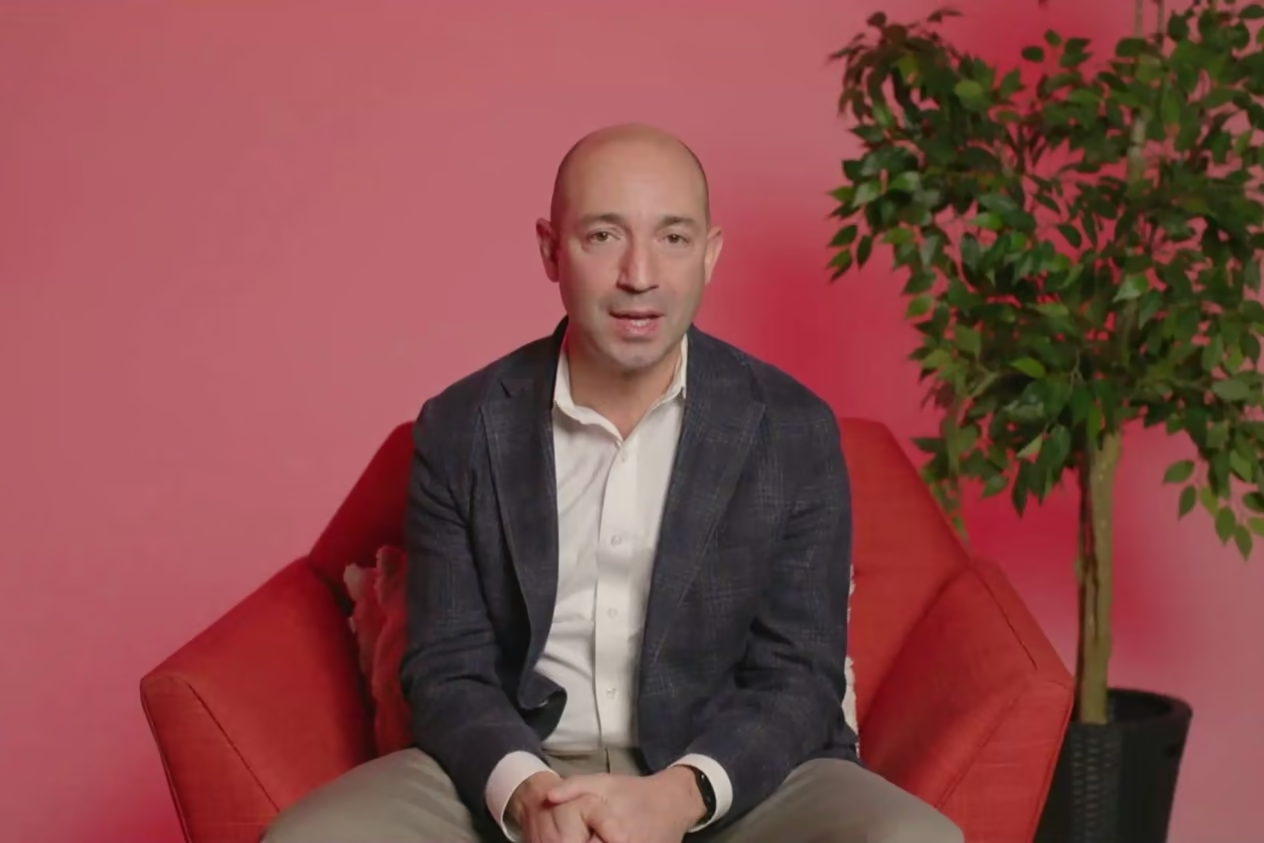


Dr. Ben Yudkoff, Co-Founder and Chief Medical Officer at Lumin Health, hosted a Reddit AMA on the r/TherapeuticKetamine community on March 6th, 2026. The below blog post is a recap of one of the questions presented on that AMA, syndicated to the Lumin Health blog in the event that it answers any questions about ketamine therapy, Spravato treatment, or general concerns you may have about treatment.
Read the original Reddit AMA here
Don’t hesitate to get in touch with us if you’re interested in learning more about ketamine for depression at Lumin Health. Thank you once again to the moderators and community members for facilitating such an engaging discussion.
Syntra asks:
I’d like to talk about the set/setting offered by clinics for those undergoing treatment with Spravato. I know clinics local to me (and have read reports from across the country) only offer a sterile treatment room. You sit under fluorescent lighting on an exam bed and are left to sit through the experience with little guidance or support outside of medical supervision. This has resulted in EMS intervention that could have been avoided with a more thoughtful and prepared setting.
How do you approach this in your clinic, and when teaching new providers is this something you advise them to consider when offering it in their own practice? I realize how cold the medical field tends to be when it comes to an “experience” from altered mentation - what can be done to change the sterile approach providers are forcing Spravato patients to endure?
Answer from Dr. Ben Yudkoff, Co-Founder and Chief Medical Officer of Lumin Health:
Thanks for the question. I have seen all sorts of different treatment environments (including the harder ones that you describe). The approach to the setting was a really invigorating consideration to work through when starting the practice. Here are some of the foundational principles we use at Lumin Health to guide our set-and-setting approach: the entire space should feel homey, not overtly clinical, and usable. Every room at Lumin Health is dedicated to only one person. We’ve designed these private treatment rooms to look and feel like living rooms – colorful, inclusive of plant life, reclining chairs, and weighted blankets – to make the treatment feel safe, respectful, and calm. However, this warmth is always paired with clinical rigor. Our vital sign monitoring equipment is unobtrusive but continuous, ensuring patients feel completely safe while ensuring the comfort and emotional safety is critically present throughout. There are, quite simply, better outcomes when people are more comfortable with treatment.
Encouraging a change in mind for other clinics is hard but happening. I think showing people what a well set-up clinic can look like raises the bar, inherently, and I see clinics beginning to elevate the experience. Encouraging people to invest in environment (as opposed to making it as efficient as possible to see the largest possible volume) improves the sustainability of the clinic (that is – people have better outcomes and recommend it to others, they don’t leave the practice because the environment is uncomfortable) – making an economic argument around forward investing in the set and setting is a strong one for people setting up sites and debating how they want to develop their business model. There are other factors at play, such as developing language around validating the psychedelic experience. For a lot of providers, incorporating language around the experiential benefits of ketamine and esketamine is uncomfortable territory as it can sound, when engaged in incompetently, like promoting substance use. But bringing people into awareness of how the conversation can happen responsibly, and allowing language to help influence thought and consideration, I think we’re moving to a greater awareness about the role for set and setting in setting up a practice that’s designed to be helpful and conscientious of what people experience when receiving treatment.
You've read the science. Now take the next step.
Lumin Health provides safe, expert-administered ketamine and Spravato treatment across Massachusetts and the greater Washington DC/Maryland area. Your journey starts with a free, no-commitment intro call.
Available in Massachusetts and the greater Washington DC/Maryland area.