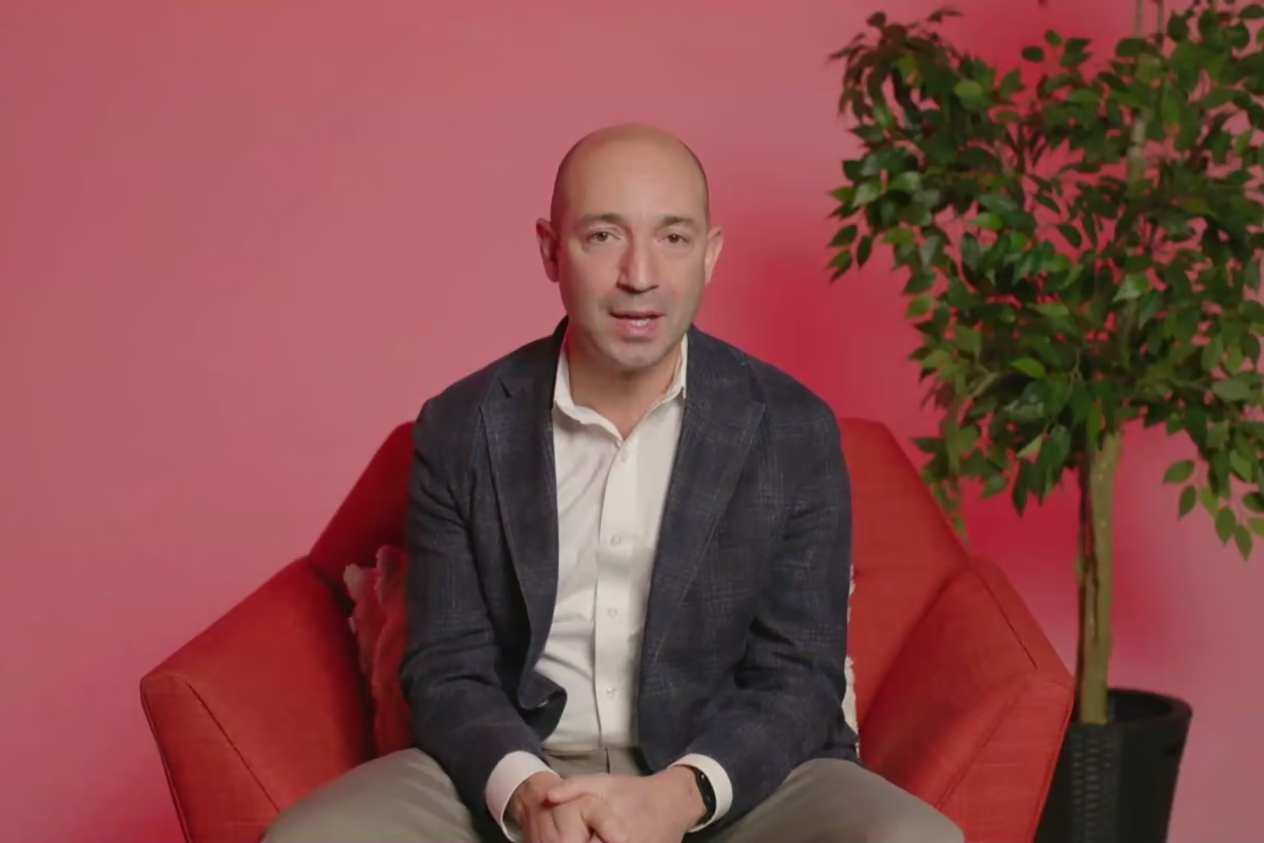


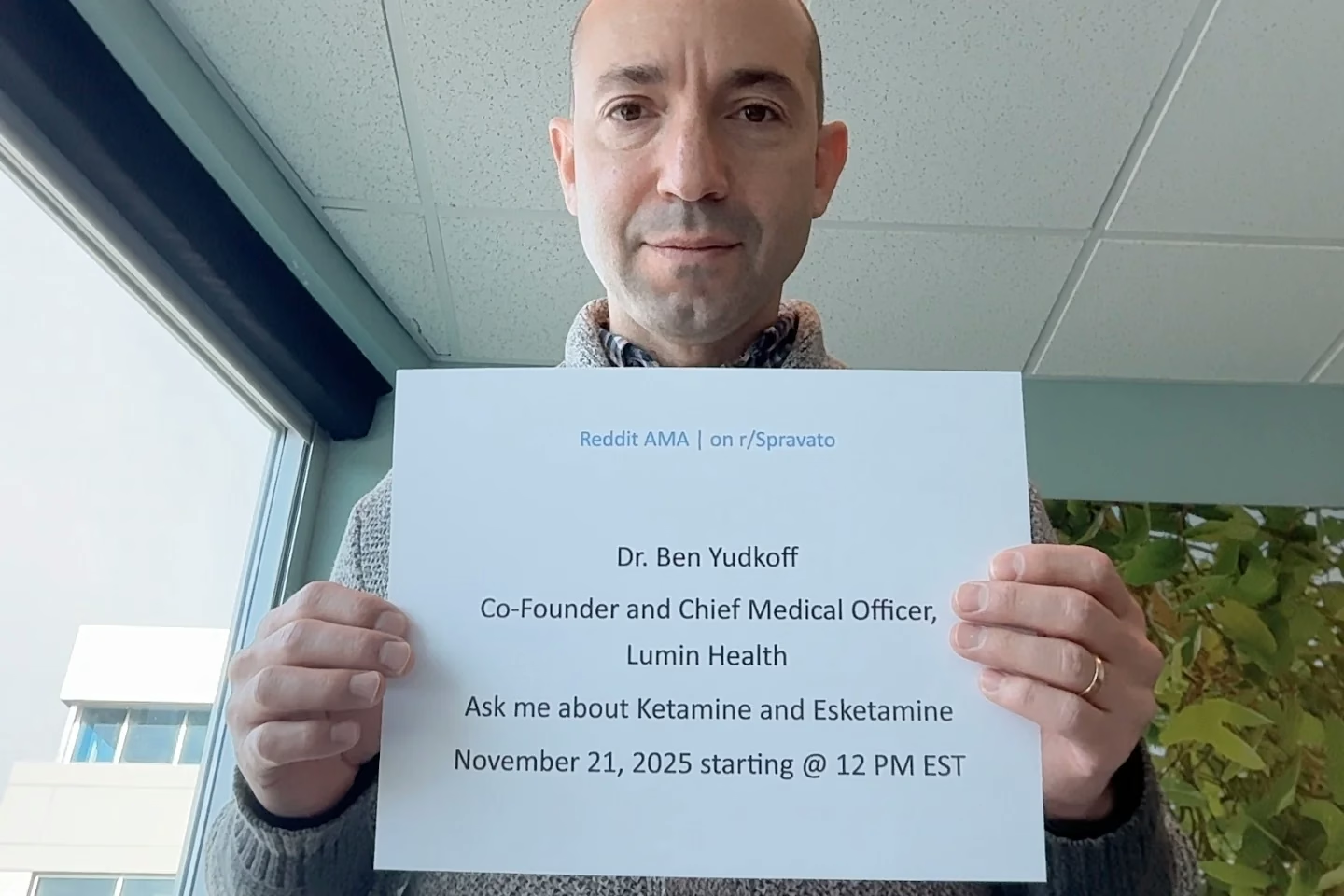
Dr. Ben Yudkoff, Co-Founder and Chief Medical Officer at Lumin Health, hosted a Reddit AMA on the Spravato community on November 21, 2025. The below blog post is a recap of one of the questions presented on that AMA, syndicated to the Lumin Health blog in the event that it answers any questions about ketamine therapy, Spravato treatment, or general concerns you may have about treatment.
Read the full AMA on r/Spravato here
Don’t hesitate to get in touch with us if you’re interested in learning more about ketamine for depression at Lumin Health. Thank you once again to the moderators and community members for facilitating such an engaging discussion.
carunderwater0 asks:
Hi Dr. Ben, I've been taking Spravato weekly for several months now. I'm interested in your take on what activities or routines you might recommend for patients to put in place in order to take advantage of Spravato's relationship with neuroplasticity in order to promote cognitive fitness and positive mental health.
You've touched on diet and exercise, I imagine journaling and working with a therapist are also helpful. If you could "prescribe" other activities that might be new to some of us, what would they be? I've heard some people watch tv during their sessions, others do sudoku--how can we claim our time during sessions in a way that will build upon the mechanism of effect? How would you fill your time if you were taking Spravato yourself?
I realize that it's tricky to navigate a lot of these questions because since we are not your patients you aren't privy to things like medications/supplements we take, diagnoses we may have or pre-existing health conditions that may affect your answers. I appreciate your time and attention to this AMA--I've spoken with others who, like myself, do not feel that our own doctors are willing/able to provide these answers.
Answer:
CarUnderWater -- great question and I don't know why people don't ask this more (and why docs don't talk about it more). I'll start with a big idea and then drill down: for those who aren't familiar with the term "neuroplasticity" let's define it -- neuroplasticity is the inclination of brain cells to reach out and connect to other brain cells. Spravato increases neuroplasticity by nudging the brain cell to release a hormone called Brain-Derived Neurotrophic Factor (BDNF) (BDNF) which causes the production and maintenance of these connections (called "synapses"). Take a leap of faith with me (or else my response will be tomes long) -- these connections, these synapses help different regions in our brains talk to one another and regulate each other and (here it comes) these synapses are the material manifestations of thought - our reason, our recollection, our interpretation, our responses.
Many people who have depression have patterns (neurologically and psychologically -- and, to get deep here for a minute, I really don't regard any difference between neurology and psychology - they are, at their core, one and the same!) that lean toward a negative appreciation of the individual and for circumstance. This can manifest as a self-critical thought patterns or a pessimistic/negativistic appreciation for circumstance - this isn't choice in the classic sense of the term, it is how the brain (psychology and neurology) is inclined.
When Spravato opens a window of neuroplasticity what it is doing is giving a person more of an opportunity to do two things: help different areas of the brain regulate each other, and help lay down new thought patterns. If you're still with me, let's tease these two apart:
The brains of people who have depression show that there may be changes to how "connected" the brain is with these synapses. One way to think about what this means is that different areas of the brain may not be able to adequately talk to one another and regulate each other. By increasing the connectivity between brain cells, Spravato is creating new pathways by which information can flow, and new channels in which discrete nodes in the brain can participate in conversation with other nodes - they can regulate each other better. This may have implications for depression. This process is largely automatic and not easily influenced by a person's activity (for any neuroscientists out there, that idea is easily challenged, but it can serve as a good model for explaining what I'm about to say...)
There are other parts that are more directly influenced. The patterns of our day (our sleep wake cycle, our appetite cycle) are hard coded and, if we have an increase in connectivity, we have the ability to more readily lay down new fundamental patterns as we "nudge" our brain cells into building new ways of regulating our day. If we challenge our brains - like with social engagements - the architecture that supports those activities may be more readily buildable. If we have running negative refrains of who we are or how we are, challenging those ideas with fresh, positive ones (hopefully made easier because the medication is also making us feel better) can "lock" those ideas in more readily because, again, the brain is more inclined to grow those ideas into the physical lattice of our brain cell connection system.
There are so many ideas out there about how to use these moments to our benefit. Rather than give a one-by-one example (almost impossible given how many there are), I retreat to a general position: think about how depression is manifesting for you: what aren't you able to do, what life patterns have been disrupted, how do you think about your future, how apt are you to perceive a challenge as a threat (i.e., impossible to do or risky to you), how much do you register a pessimistic interpretation when someone else might not... With this inventory of symptoms, take opposite steps. Your brain may be wayyyyy more receptive to your opposite actions/opposite approaches, hard code them into the physical connections between your brain cells, and provide an automatic counternarrative (not automatic at first - this definitely takes intention and effort) to the symptoms that are keeping you locked into a depressed position.
I hope this helps!
Take the first step today.
If you or a loved one in Massachusetts and the greater Washington DC/Maryland area is struggling with depression or anxiety, Lumin Health's team of experts is ready to help. Book a free 20-minute consultation to learn if ketamine therapy could be the breakthrough you've been looking for.
Available in Massachusetts and the greater Washington DC/Maryland area.