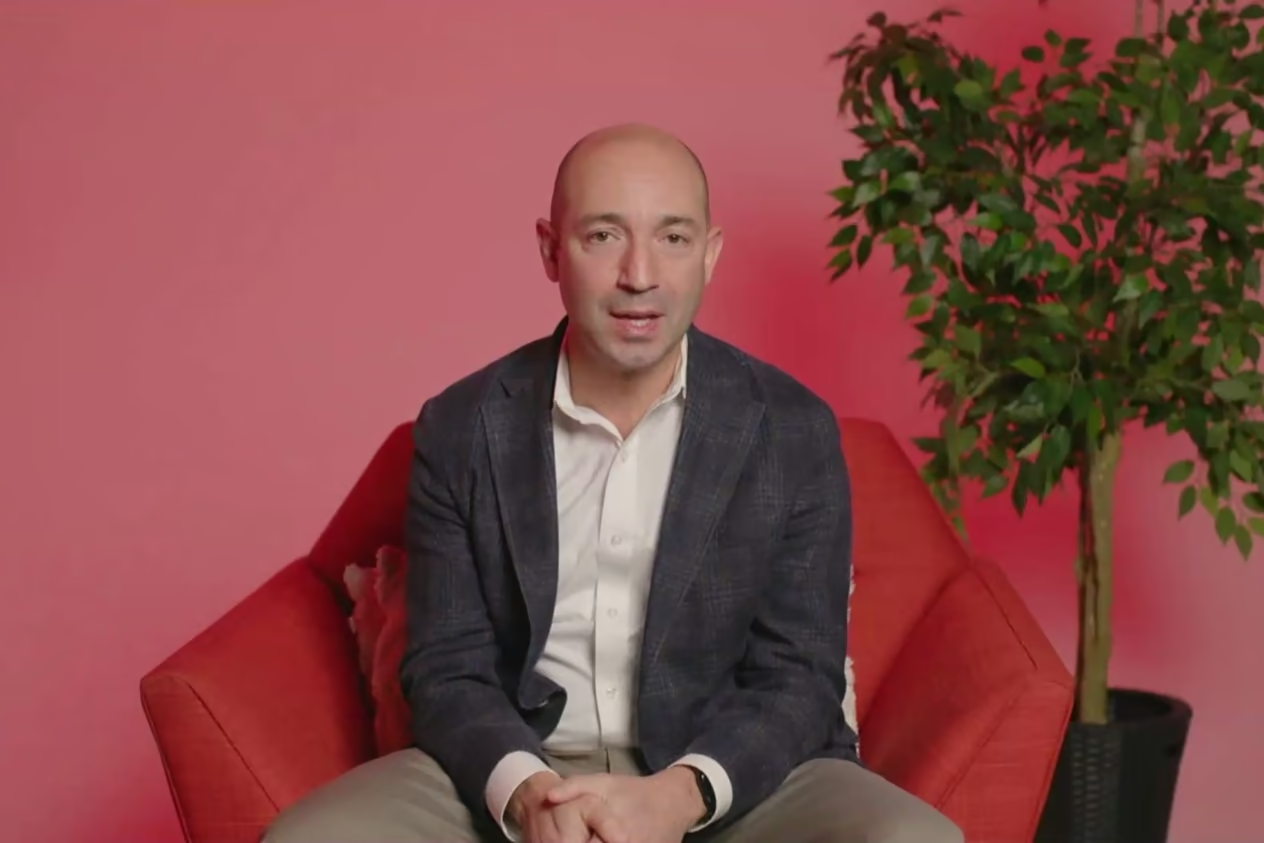


Dr. Ben Yudkoff, Co-Founder and Chief Medical Officer at Lumin Health, hosted a Reddit AMA on r/TherapeuticKetamine community on March 6th, 2026. The below blog post is a recap of one of the questions presented on that AMA, syndicated to the Lumin Health blog in the event that it answers any questions about ketamine therapy, Spravato treatment, or general concerns you may have about treatment.
Read the original Reddit AMA here
Don’t hesitate to get in touch with us if you’re interested in learning more about ketamine for depression at Lumin Health. Thank you once again to the moderators and community members for facilitating such an engaging discussion.
Vivranthings asks:
What is the recommended protocol and what metrics do you use to decide if it has been successful?
Answer from Dr. Ben Yudkoff, Co-Founder and Chief Medical Officer of Lumin Health:
The esketamine protocol is labelled by the FDA and is pretty straightforward: twice weekly for 4 weeks (one month), then once weekly to once every other week thereafter. And then you fine tune the frequency and see for how long a person can go between treatments after that. The goal is to match treatment frequency with need.
For ketamine, the recommended protocol is for the “index course” (the initial course of treatment) is twice weekly treatments for somewhere between 6 to 10 treatments (if it's working! – if it's not working by the 3-6th treatment, the likelihood that it's gonna work by the 10th is low. After that, the protocol that I prefer is more improvisational and responding to a person's response to the medicine. Some of the patients I see let me know that they are more comfortable with a more planful approach. In that case we try to find the least frequent dosing that would still enable a person to maintain benefit - usually once monthly after the index course but things shift based on a person’s response.
The metrics we use to decide if treatment has been successful are a particular depression rating scale at Lumin Health called the MADRS rating scale because it is ubiquitously accepted by insurance companies in Massachusetts (where we’ve been operating). Other clinics may use other evidence-based/validated ones, such as the PHQ9 or the Beck Depression Inventory (BDI). It’s also important to note that the most important metric to evaluate the success of a treatment protocol is what the person is noticing, subjectively. Sometimes the rating tools don't capture the profundity or breadth of benefit because they don’t ask the right questions. I deeply appreciate the more subjective and impressionistic reports of the patients I see as they pinpoint the changes most important to them and sometimes provide prompts to people to put into words what might otherwise be intuitively experienced.
Find out if ketamine therapy is covered by your plan.
Lumin Health accepts most major insurance providers for Spravato treatment in Massachusetts and the greater Washington DC/Maryland area. Use our free tool to check your coverage instantly — no forms, no phone calls.
Available in Massachusetts and the greater Washington DC/Maryland area.