

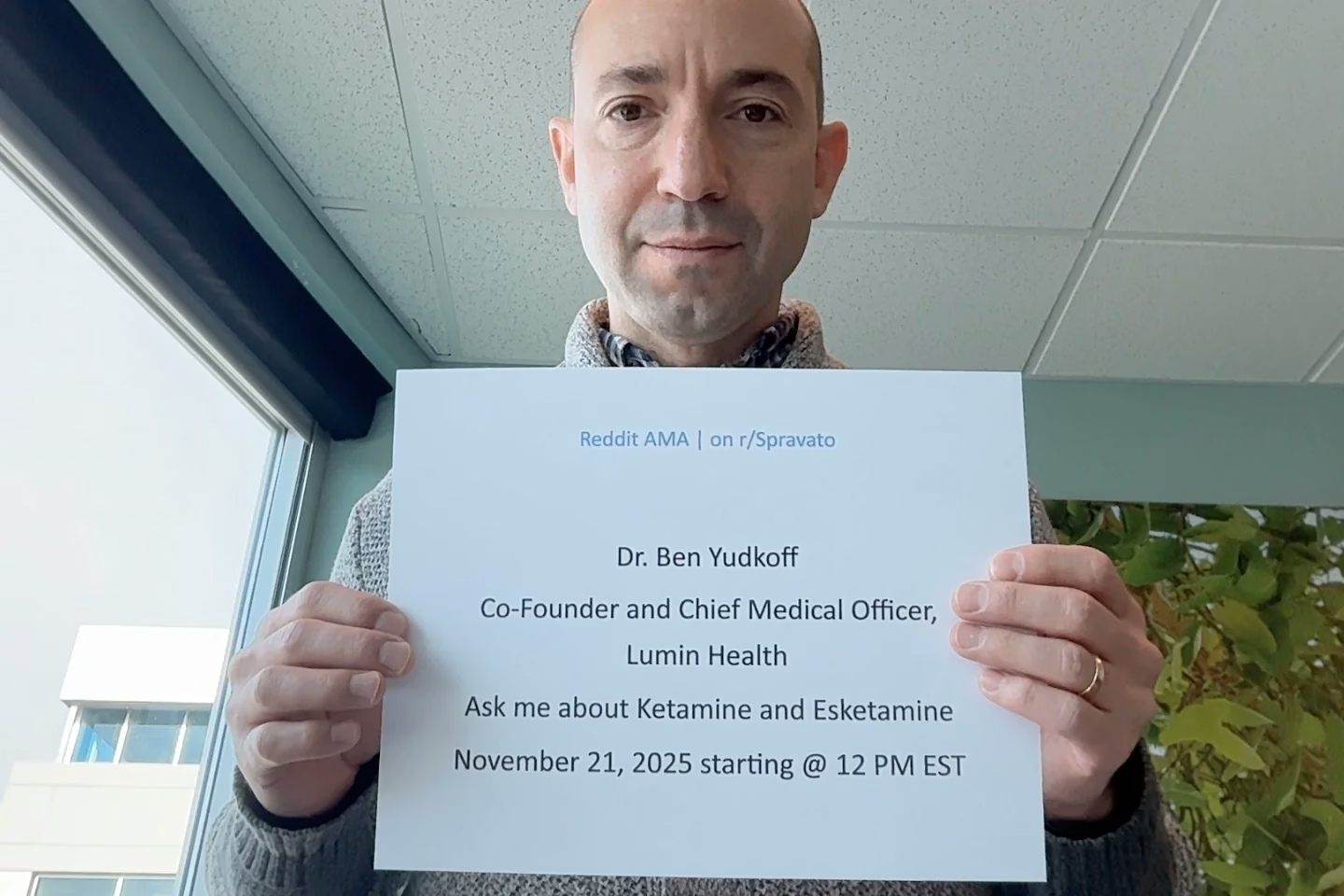
Dr. Ben Yudkoff, Co-Founder and Chief Medical Officer at Lumin Health, hosted a Reddit AMA on the Spravato community on November 21, 2025. The below blog post is a recap of one of the questions presented on that AMA, syndicated to the Lumin Health blog in the event that it answers any questions about ketamine therapy, Spravato treatment, or general concerns you may have about treatment.
Read the full AMA on r/Spravato here
Don’t hesitate to get in touch with us if you’re interested in learning more about ketamine for depression at Lumin Health. Thank you once again to the moderators and community members for facilitating such an engaging discussion.
catladyorbust asks
Hello Dr. Yukoff. Thank you for answering questions. One thing I see a lot here that makes me uncomfortable is people trying to potentiate Spravato with all manner of other substances. Can you clarify whether dissociation is related to effectiveness of Spravato?
Answer:
I share a lot of your same discomfort. There is a lot of uncertainty about this, and the potential compounding of risks once we introduce more variables into the existing risk structure is its own kettle of fish.
The question of dissociation and its relationship to Spravato is very complicated. There is some evidence coming from the ketamine-world that can shed some light: the bulk of the efficacy of ketamine is had before there are dramatic dissociative events. So even low dose ketamine produces a large proportion of what we would call the "rate of response." As a person marches up on the dose there may be smaller incremental benefits. Put in other words, going up on a dose two times is not going to return two times the efficacy, but something much much lower than that -- there's a law of diminishing returns. That said, many practitioners like myself rely on strong dissociation to be the threshold dosing of ketamine - once somebody is really feeling the effects of the dissociation, the likelihood that more ketamine is going to produce more improvement is very very low and there is compounding risk in how a person experiences side effects as you begin to dose above dissociation. Dissociation is not necessary for efficacy, but for those who aren't experiencing benefit we dose until the person dissociates and, if ketamine still doesn't work, it's unlikely to.
Generally speaking, I use this model to think about Spravato. Dissociation for both ketamine and Spravato is not a requirement for effectiveness.
At the heart of this great question, enthusiasm has to be measured against potential risk. One would do well to be measured against compounding risk. For all of the biohackers out there who are trying to find ways of getting what they are looking for -- increased benefit -- I would hope that everybody has an opportunity to be in a relationship with a good provider who is listening and thinking creatively about doing things in the safest possible way so that everybody has access to the most amount of potential benefit while protecting against the greatest possible risk.
Find out if ketamine therapy is covered by your plan.
Lumin Health accepts most major insurance providers for Spravato treatment in Massachusetts and the greater Washington DC/Maryland area. Use our free tool to check your coverage instantly — no forms, no phone calls.
Available in Massachusetts and the greater Washington DC/Maryland area.