

Ketamine-assisted psychotherapy is rarely covered by insurance as a package, because there is no dedicated billing code for it, though the therapy portion can sometimes be billed as standard psychotherapy and esketamine (Spravato) is often covered for treatment-resistant depression.
If you're looking into ketamine-assisted psychotherapy, cost is probably one of the first walls you've hit. Searching for clear answers about coverage can be exhausting, especially when you're already carrying depression that hasn't lifted. We want to give you a straight explanation of how coverage works, what drives the price, and which related options insurance is more likely to pay for.
One important note first: Lumin Health doesn't offer psychotherapy or ketamine-assisted psychotherapy. We offer esketamine and intramuscular (IM) ketamine treatment under psychiatric care. We wrote this guide because so many people ask us about coverage, and an honest answer is useful wherever you end up getting care.
What Is Ketamine-Assisted Psychotherapy?
Ketamine-assisted psychotherapy (often shortened to KAP) pairs ketamine with psychotherapy from a licensed therapist. Programs vary, but many include preparation sessions before a dose, a long dosing session with a therapist present, and follow-up sessions afterward to help you make sense of the experience. That structure is part of what makes the cost and coverage picture complicated. A single program can bundle a medicine, medical monitoring, and several hours of a therapist's time.
Is Ketamine-Assisted Psychotherapy Covered by Insurance?
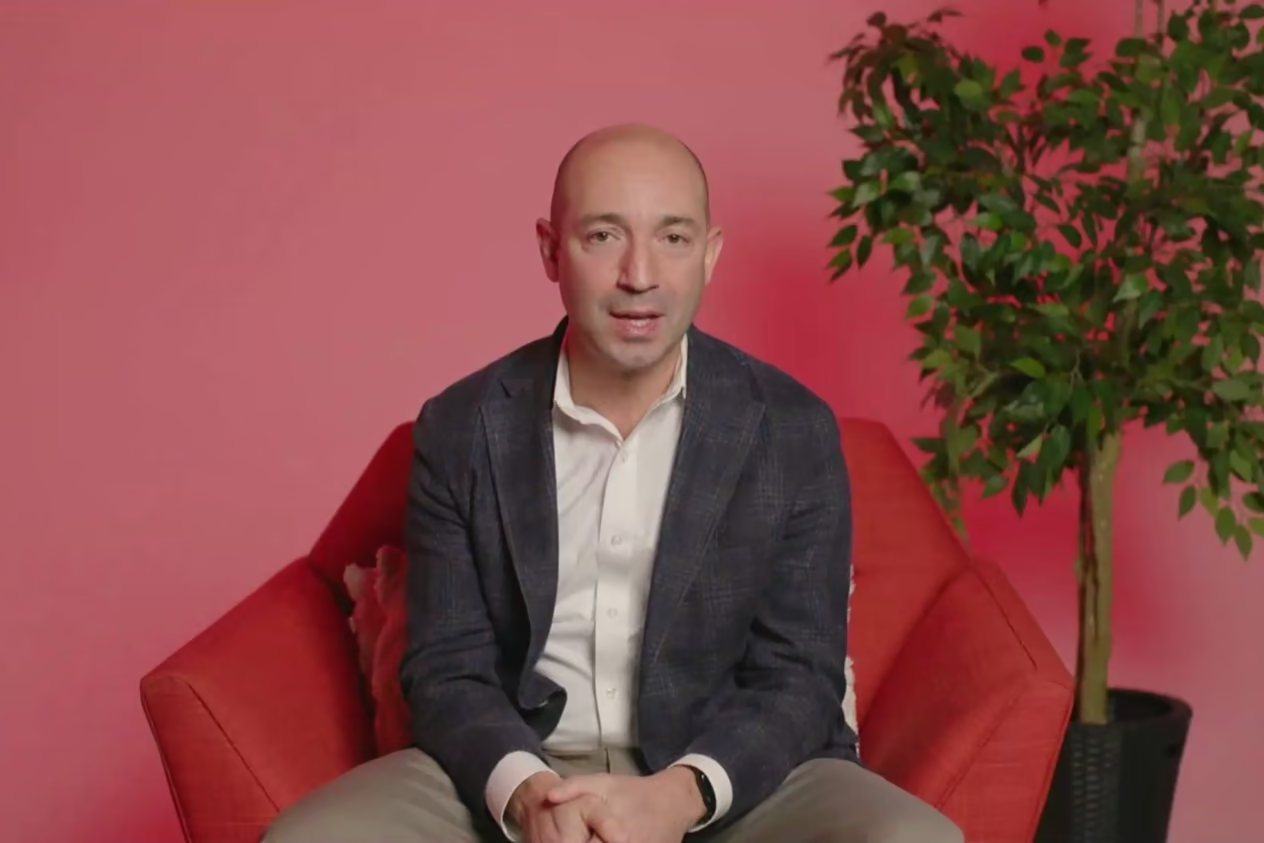
Usually not as one service. When the question came up in a live session for families in October 2026, Dr. Ben Yudkoff, Chief Medical Officer and co-founder of Lumin Health, explained that the pivotal question is whether your insurer classifies the service as psychotherapy. If it does, the therapy portion can be billed under a standard psychotherapy code. If it doesn't, he said, there's no sign yet of insurers creating a separate billing code for ketamine-assisted psychotherapy.
In practice, that leaves a patchwork:
- The therapy time: Some practices bill standard psychotherapy codes with time-based add-ons to cover sessions that run around two hours. Whether that works depends on your insurer approving it and on whether the therapist accepts that level of reimbursement.
- The ketamine itself: Ketamine for depression is off-label, so most commercial insurers don't cover it for mental health. The medicine and the medical monitoring that goes with it are often self-pay.
- Out-of-network benefits: If your plan includes out-of-network benefits, you may be able to submit an itemized receipt (called a superbill) for partial reimbursement. Results vary by plan.
Before you start any program, it's worth calling your insurer and asking which parts, if any, they would cover.
Why Ketamine-Assisted Therapy Is Hard to Cover
Part of the challenge is that it's difficult to measure the effect of a medicine separately from the effect of the therapy when both are delivered as one package. In August 2024, the FDA declined to approve an application for MDMA-assisted therapy for PTSD, which had paired the medicine with psychotherapy, and asked for an additional study. Dr. Yudkoff pointed to that decision as an example of how hard regulators found it to separate the two effects. He added that developers of other newer medicines in this area generally aren't building psychotherapy in as a billable component. We've written more about that 2024 decision and where ketamine fits for PTSD.
What Shapes Ketamine-Assisted Psychotherapy Cost
Prices vary widely from program to program, and it's hard to compare them because each one bundles different pieces. These are the parts that usually drive the total:
- The initial medical and psychiatric evaluation
- The medicine itself, and how it's given
- Medical monitoring during and after each dose
- Therapist hours for preparation, the dosing session, and follow-up
- The number of sessions in the full program
When you talk with a program, consider asking for an itemized estimate. It also helps to ask whether the therapist is in-network with your plan, whether they can provide a superbill, and who is responsible for your medical safety during the dose.
Insurance-Covered Esketamine (Spravato)
If coverage matters most to you, the clearest path is esketamine (Spravato). It is FDA-approved for adults with treatment-resistant depression and for depressive symptoms in adults with major depressive disorder with acute suicidal ideation or behavior. Because of that approval, it's often covered by insurance, including by most major insurers in Massachusetts, when your plan's criteria are met. With coverage, the cost often aligns with a standard office visit co-pay.
Each insurer defines treatment-resistant depression a little differently. Some look at how many antidepressants you've tried, whether augmentation medicines were part of that, and sometimes whether you've had psychotherapy. We work with you to find out whether your plan would approve coverage. You can review the insurance plans we accept, read our guide to insurance for the nasal spray and ketamine, or see how Medicare coverage works.
IM Ketamine Treatment Is Usually Self-Pay
IM ketamine is off-label for depression, so it's usually an out-of-pocket expense. For some people it's still worth considering, for example when they value a wider range of dosing or when coverage for the nasal spray isn't possible. Lumin Health can provide a superbill for patients with out-of-network PPO benefits to submit for possible partial reimbursement. Current pricing is on our ketamine treatment cost page.
Keeping Your Own Therapist During Ketamine Treatment
You don't need a ketamine-assisted psychotherapy program to keep therapy in your life. Many people continue working with their own outside therapist, on their own schedule and under their own coverage, while they receive ketamine-based treatment at a medical practice.
With your consent, we communicate with your existing providers about how treatment is going and any major changes along the way. Dr. Yudkoff summed up the spirit behind that:
"Nothing happens outside the context of relationship."
— Dr. Ben Yudkoff, Chief Medical Officer, Lumin Health
If your therapist has questions, our page on how therapists work alongside ketamine may help, as may this piece on doing CBT during ketamine care.
Finding a Path That Fits Your Budget
Cost is a real part of any treatment decision, and it's okay to let it shape your choice. With locations across Massachusetts and Bethesda, Maryland, we can walk you through what your plan is likely to cover before you commit to anything. If you'd like to explore whether the nasal spray or IM ketamine may be a fit, we would be grateful to talk it through with you.
Frequently Asked Questions
Is ketamine-assisted psychotherapy covered by insurance?
Rarely as a package. There is no dedicated billing code for it, so coverage depends on whether your insurer treats the therapy portion as standard psychotherapy. The ketamine itself is off-label for depression and is usually self-pay.
How much does ketamine-assisted psychotherapy cost?
Costs vary widely because programs bundle an evaluation, the medicine, medical monitoring, and several hours of therapist time. Ask any program for an itemized estimate and check with your insurer about the therapy portion.
Does Lumin Health offer ketamine-assisted psychotherapy?
No. Lumin Health offers esketamine (Spravato) and intramuscular (IM) ketamine treatment and does not offer psychotherapy. Many people continue seeing their own outside therapist during treatment.
Is Spravato covered by insurance?
Often, yes. Esketamine (Spravato) is FDA-approved for adults with treatment-resistant depression and for depressive symptoms in MDD with acute suicidal ideation or behavior, and most major insurers in Massachusetts cover it when plan criteria are met. Check with your insurer or use our eligibility form at lumin.health/insurance-we-accept.
Can I use out-of-network benefits for IM ketamine?
Possibly. Lumin Health can provide a superbill for patients with out-of-network PPO benefits to submit for possible partial reimbursement. Reimbursement varies by plan.