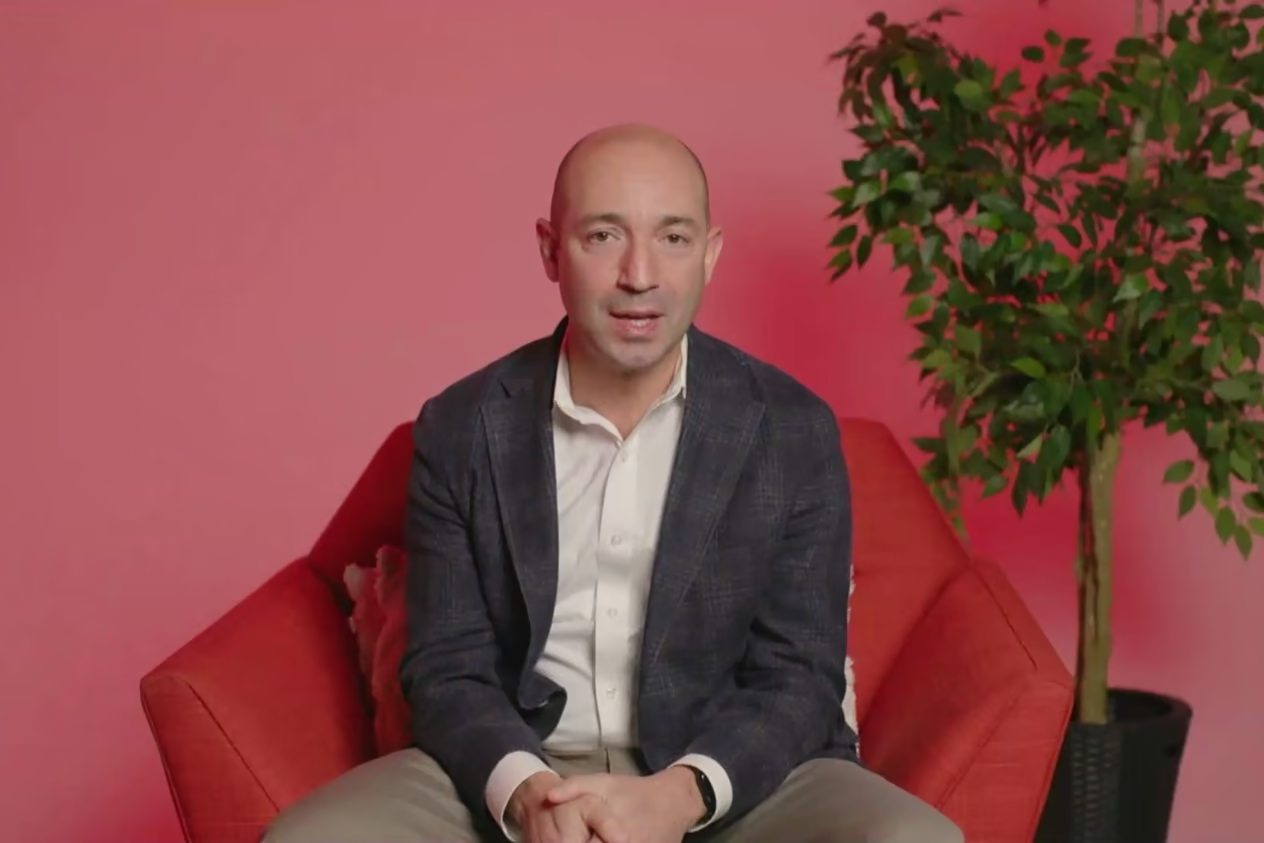


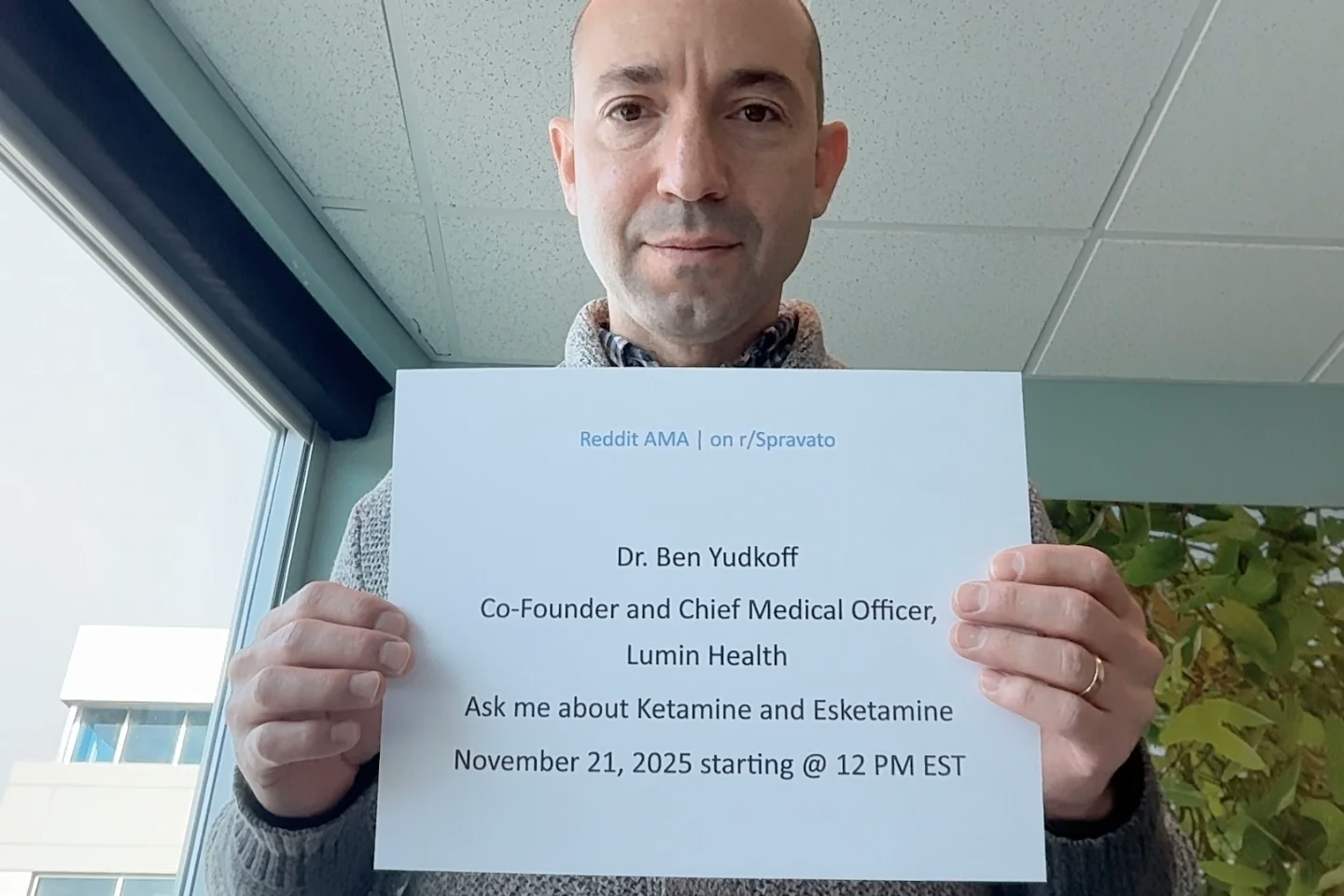
Dr. Ben Yudkoff, Co-Founder and Chief Medical Officer at Lumin Health, hosted a Reddit AMA on the Spravato community on November 21, 2025. The below blog post is a recap of one of the questions presented on that AMA, syndicated to the Lumin Health blog in the event that it answers any questions about ketamine therapy, Spravato treatment, or general concerns you may have about treatment.
Read the full AMA on r/Spravato here
Don’t hesitate to get in touch with us if you’re interested in learning more about ketamine for depression at Lumin Health. Thank you once again to the moderators and community members for facilitating such an engaging discussion.
Piperella1957 asks
I’ve been doing Spravato since last May. I may stop in December. Getting rides and taking Ubers is just not workable. I started to get off Effexor and I did. I’m on Wellbutrin and dxm because I can’t afford auvelity. Is the only protocol for Spravato a lifetime treatment? It’s just so disruptive of any kind of life
Answer:
Thanks Piperella --
Spravato does not need to be a lifetime treatment. Most of the research on Spravato and its longitudinal use — meaning use over weeks, months, years — has been done by the pharmaceutical company Janssen that produces Spravato. There's not been a lot of other research done long-term on how people should take Spravato. I typically counsel patients that people should take Spravato in accordance with their own wishes. We have FDA labeling and a structure - which is twice weekly for four weeks on initiation. If it's working, transition to once weekly for four weeks makes sense, and if it continues to work, transitioning to once weekly or once every other week makes sense. But there's no discrete "end" in the plan, and this creates some confusion.
There are people out there who find Spravato beneficial who are able to take it once monthly and they don't need that more intensive frequency. There are people who take Spravato as needed meaning they can stay off of it for months at a time and they come back. And there are some people who find that the treatment initiates a recovery that is so categorical that they can manage without it.
The most important thing is that a person is partnered with a clinic that operates flexibly and helps a person figure out what that individual's values and particular needs are. The causes of depression are so complicated and it's difficult to know at the outset whether someone should take the medication briefly, sporadically, or continually. In that way, it's a lot like standard antidepressant treatment. Time kind of sorts this out, along with continual iteration on the plan - changing it according to the needs of the moment, and adapting it when new circumstances arise.
A person should be able to explore what's right for himself, herself, themselves. A person should pick a frequency that matches their own particular needs and should be able to work with a clinic that's able to roll with exactly that kind of plan.
Update From Dr. Yudkoff: Can Esketamine (Spravato) Be Used for Just an Acute Period? (October 2026)
Families asked a version of this question again in a live session in October 2026, and Dr. Yudkoff's answer was yes. Some people use esketamine (Spravato) for a bout of depression that hasn't responded to standard treatment, find that it helps, and then stop because their improvement feels secure. FDA labeling can give the impression that everyone's plan must include long-term maintenance. It doesn't have to.
What comes after treatment matters, too. It often includes healthy habits and reasserting a sense of who you are, not only making sense of the sessions themselves.
The research offers some guidance on averages. People who respond but still have some symptoms tend to see depression return within about a month of stopping. People who reach remission, meaning they are essentially symptom-free, can often go much longer without treatment, though studies haven't followed people long enough to say exactly how long. None of this predicts what will happen for you. If stopping predictably brings symptoms back, an individualized maintenance plan can be designed with you. If you pause and things change, the door stays open, and restarting should be easy.
If you're also weighing oral options, such as the newer antidepressant that combines bupropion and dextromethorphan (Auvelity), see our comparison of Auvelity vs. Spravato and ketamine.
Take the first step today.
If you or a loved one in Massachusetts and the greater Washington DC/Maryland area is struggling with depression or anxiety, Lumin Health's team of experts is ready to help. Book a free 20-minute consultation to learn if ketamine therapy could be the breakthrough you've been looking for.
Available in Massachusetts and the greater Washington DC/Maryland area.