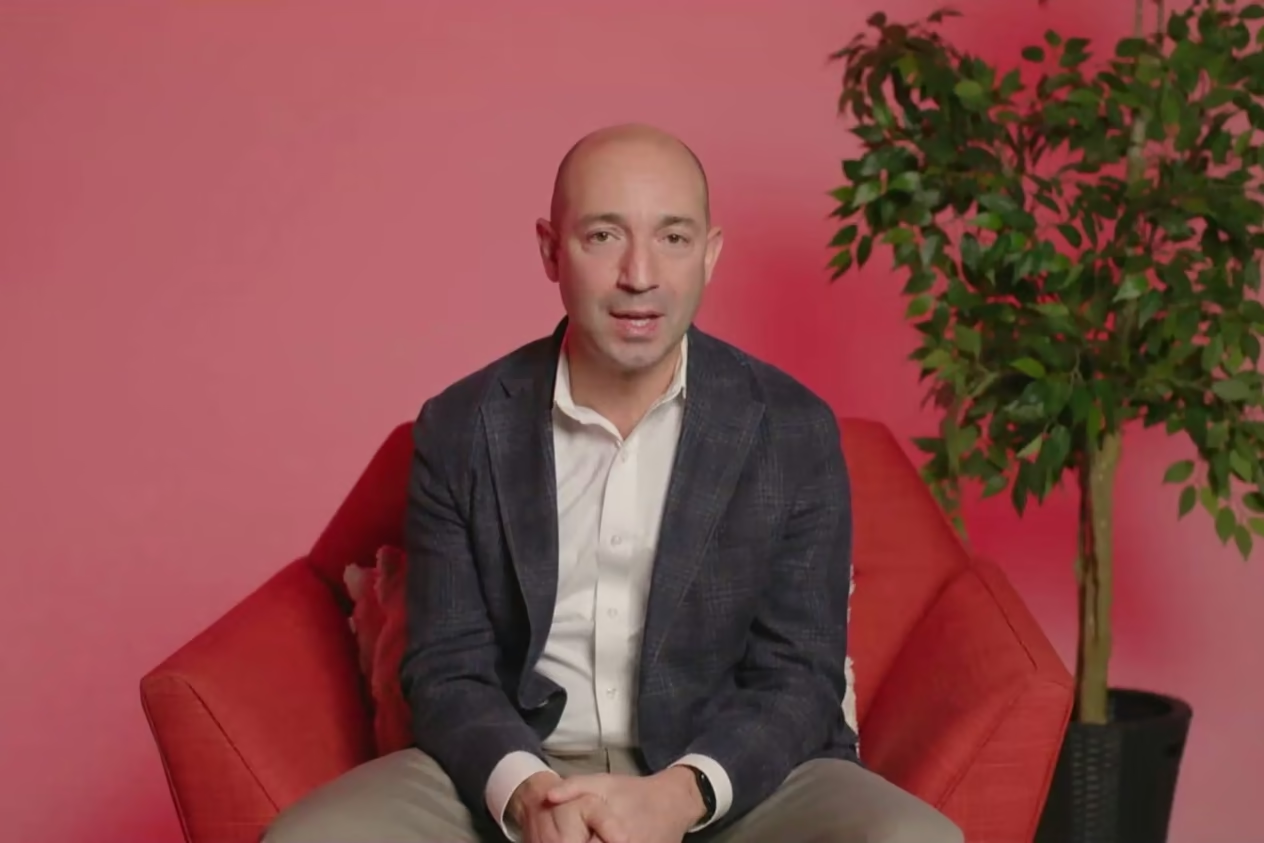


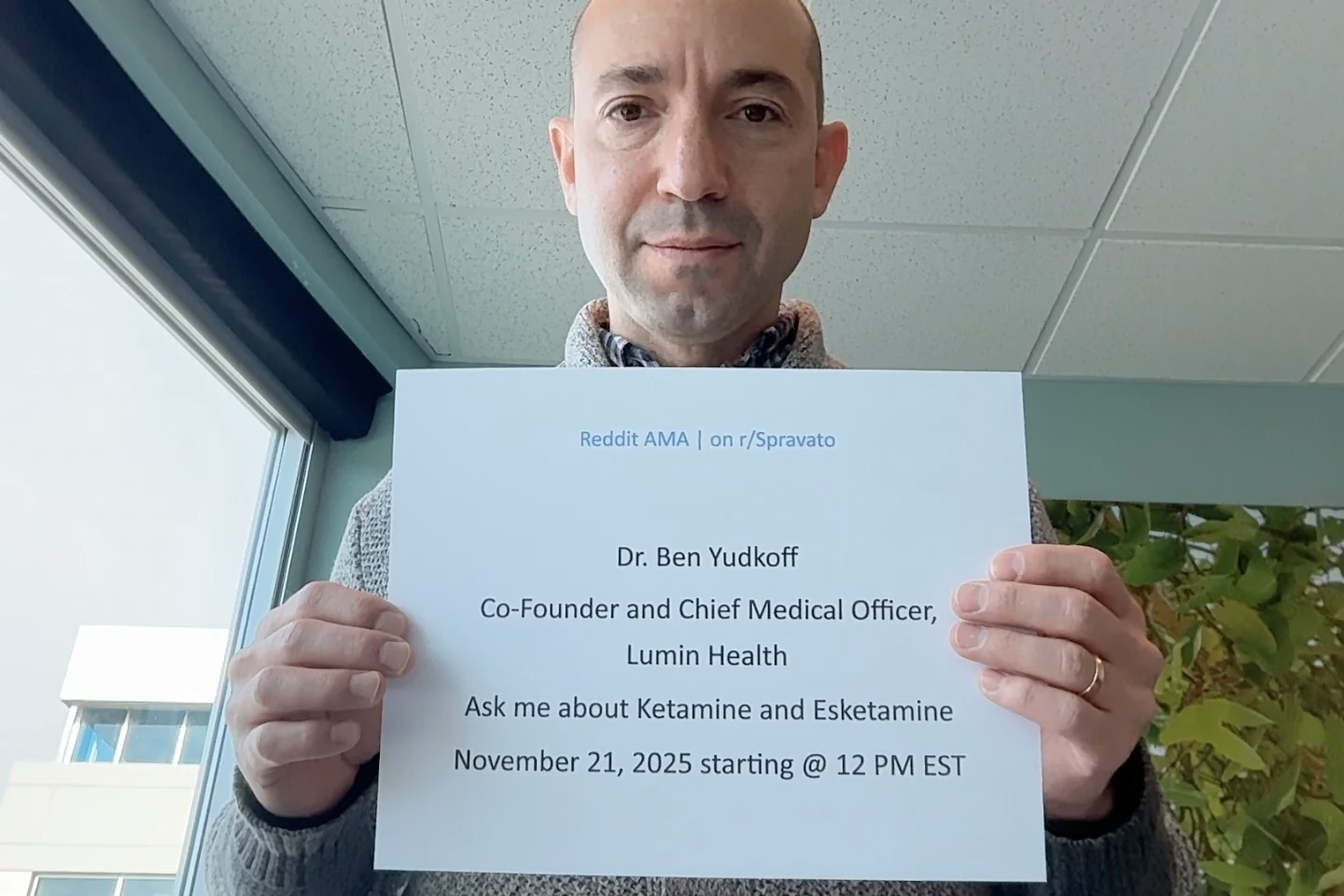
Dr. Ben Yudkoff, Co-Founder and Chief Medical Officer at Lumin Health, hosted a Reddit AMA on the Spravato community on November 21, 2025. The below blog post is a recap of one of the questions presented on that AMA, syndicated to the Lumin Health blog in the event that it answers any questions about ketamine therapy, Spravato treatment, or general concerns you may have about treatment.
Read the full AMA on r/Spravato here
Don’t hesitate to get in touch with us if you’re interested in learning more about ketamine for depression at Lumin Health. Thank you once again to the moderators and community members for facilitating such an engaging discussion.
catcallergizmo asks
Hi Dr Ben, Thanks for doing this AMA! What are the common factors you observe in your most successful patients? What have you noticed that helps in your experience?
Answer:
Thanks CatCaller... The most important factor in the patients I see who have success is WILLINGNESS. Let me try to back that weird answer up: when one starts to consider Spravato a person is doing more than just thinking about another medication. They are saying "I'm recognizing a vulnerability in me (the depression), but the strongest parts of myself are taking action and taking care of myself." The very act of seeking care is an acknowledgement that a person is strong and has agency for themselves, even if the person doesn't feel that way every day. People considering Spravato are willing to engage some uncertainty. Will the experience be good or bad? How will I respond? Will I respond? To engage the experience a person must experience themselves as self-reliant, brave, and capable of handling circumstances by virtue of their own skills. It's a real Explorer mentality.
Another characteristic that, in my experience, tracks with efficacy is, when evaluating whether the medicine is working, having the ability to appreciate how the medicine might be impacting a person both by going through finely changing details (eg, how am I sleeping, how's my appetite, how's my energy etc.) alongside an ability to take a more gestalt impressionistic take on how things are going (how am I feeling and doing, in general).
Patience is important. The medicine is sometimes spoken about in terms of a very quick effect - and for some people that's so - but for some people it might take three to four weeks to prove efficacy. Potentially waiting a couple of weeks to see if something is effective can be challenging.
Like all things, having good general physical health is important. If a person has poor general medical health, it can impact the tolerability and safety of the treatment.
Let's take a quick pause: a question that comes up a lot is how the vulnerability that comes from having experienced trauma impacts care. The treatment experiences can elicit a sense of vulnerability or being not-entirely-in-control -- hard enough for everyone, let alone those who have experienced extraordinary hardship. Similar to some of the themes in my responses, above, being able to sit in a position that affirms one's autonomy and say-so is valuable for all people, and especially so with people who have histories of trauma. As the effects of the Spravato treatment begin to impact how a person experiences the world (i.e., when dissociation and some psychedelic-like effects begin), a person may lose a sense of being categorically in the driver's seat. Being open to this is really important.
A sense of agency, a sense of curiosity, a sense of exploration, tempered expectations, willingness to sit in vulnerability, ability to keep an eye out for the detail and the big picture, good physical health -- these are some of the characteristics that help nudge care to the positive.
Take the first step today.
If you or a loved one in Massachusetts and the greater Washington DC/Maryland area is struggling with depression or anxiety, Lumin Health's team of experts is ready to help. Book a free 20-minute consultation to learn if ketamine therapy could be the breakthrough you've been looking for.
Available in Massachusetts and the greater Washington DC/Maryland area.