

Why Can’t I Feel Joy? The Link Between Anhedonia and Mu-Opioid Receptor Sensitivity
Blunted mu-opioid receptor sensitivity is a neurobiological state where the brain’s primary pleasure and reward circuits become less responsive. This impairment in endorphin signaling is a key driver of anhedonia – the inability to feel pleasure – a core symptom of treatment-resistant depression.[1]
Beyond a Chemical Imbalance: The Reality of a "Stuck" Brain
For decades, the narrative around depression has centered almost exclusively on a class of neurotransmitters called “monoamines” – it includes serotonin, norepinephrine, and dopamine. While crucial, this model fails to capture the full picture for many individuals, especially those who find little relief from standard antidepressants. A more nuanced understanding points towards the brain’s reward pathways, specifically the mu-opioid receptor system. This is the same system that processes the brain’s natural "feel-good" chemicals, like endorphins.
When this system becomes desensitized – often due to chronic stress, inflammation, or prolonged depression – the result is profound anhedonia. It’s not just sadness; it’s a flat, gray experience where activities that once brought joy now feel meaningless. If you are navigating large, impersonal healthcare systems, this may be a common frustration, where treatment can feel like a checklist rather than a personalized investigation into the root biological cause. At our practice, we focus on the underlying neurology that standard treatments often miss.
The Neurological Signature of Blunted Reward
Think of mu-opioid receptors as docking stations for pleasure signals. In a healthy brain, these receptors are abundant and sensitive. In a brain struggling with persistent depression, they can become downregulated. Research published in Neuropsychopharmacology has demonstrated a link between depression and lowered mu-opioid receptor availability in key brain regions.[2] This biological reality creates a feedback loop: the inability to experience reward reinforces rigid, negative thought patterns, often governed by an overactive Default Mode Network (DMN) – the brain's "idle" state that can become dominated by rumination.
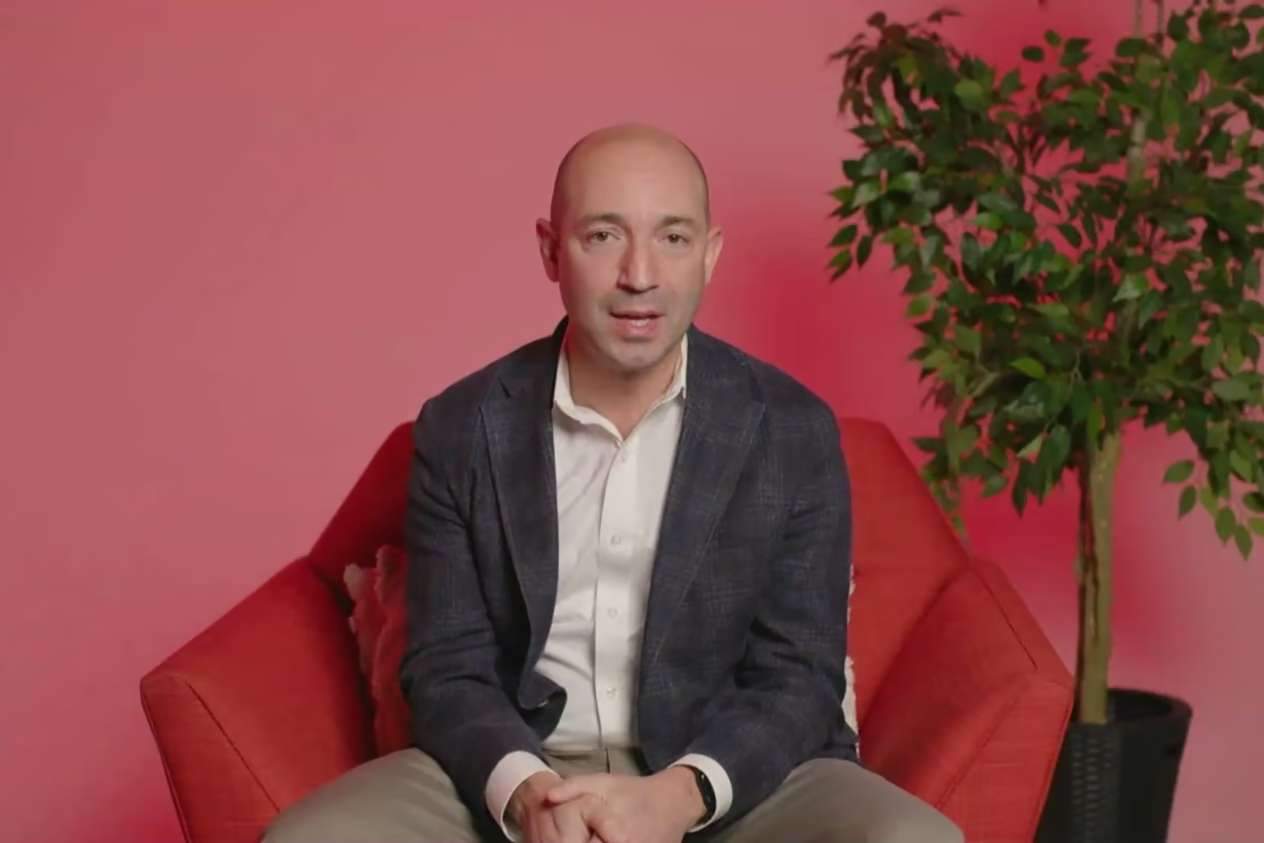
Dr. Ben Yudkoff, Chief Medical Officer at Lumin Health, notes, "We often tell individuals that their brain isn't broken – it may be stuck. Anhedonia isn't a personal failing; it's frequently a sign of a biological system that has become desensitized and locked into a rigid pattern. Our goal is to create the conditions for the brain to become more flexible and receptive again."
This is where emerging, evidence-informed options can offer new hope. Both intramuscular (IM) ketamine therapy (an evidence-informed, off-label option) and Spravato (FDA-approved for adults with treatment-resistant depression and major depression with suicidal thoughts[3,4]) work on a completely different system to interrupt this cycle.
Ketamine’s Impact on the Opioid Receptor System
There is exciting research about the role that ketamine plays in modulating the mu opioid receptor system. The prevailing theories rest on how ketamine can promote the population of mu opioid receptors on brain cells, effectively sensitizing the brain cell to endorphins.[5] It’s like putting out more satellite dishes to pick up the signal. This enables the brain to more sensitively perceive endorphins and experience their benefit: improved mood, diminished anxiety, a sense of relaxation.
Re-Engaging with Life: A Clinical Framework
At a specialized center like Lumin Health, addressing complex conditions like anhedonia involves a precise, psychiatrist-led process. The journey to restoring reward sensitivity isn't passive; it leverages the brain's neuroplastic state.
A Resource for New England and Beyond
While Lumin Health provides this specialized care to individuals in Massachusetts and the surrounding region, we believe this information is vital for anyone exploring advanced options for depression. Understanding the specific neurobiology behind symptoms like anhedonia empowers you to ask better questions and seek more targeted care, wherever you are on your journey.
If you have found that traditional treatments have failed to restore your sense of joy and engagement with life, understanding the role of the mu-opioid system may be a critical next step. We would be grateful to walk with you towards relief. Explore whether this may be a fit by learning more from our academically-affiliated leadership and care team.
References
- Mkrtchian A, Evans JW, Kraus C, et al. Ketamine modulates fronto-striatal circuitry in depressed and healthy individuals. Mol Psychiatry. 2021;26(7):3292-3301. PubMed
- Williams NR, Heifets BD, Blasey C, et al. Attenuation of Antidepressant Effects of Ketamine by Opioid Receptor Antagonism. Am J Psychiatry. 2018;175(12):1205-1215. PubMed
- Popova V, Daly EJ, Trivedi M, et al. Efficacy and Safety of Flexibly Dosed Esketamine Nasal Spray Combined With a Newly Initiated Oral Antidepressant in Treatment-Resistant Depression: A Randomized Double-Blind Active-Controlled Study. Am J Psychiatry. 2019;176(6):428-438. PubMed
- Fu DJ, Ionescu DF, Li X, et al. Esketamine Nasal Spray for Rapid Reduction of Major Depressive Disorder Symptoms in Patients Who Have Active Suicidal Ideation With Intent: Double-Blind, Randomized Study (ASPIRE I). J Clin Psychiatry. 2020;81(3). PubMed
- Gomes I, Gupta A, Margolis EB, et al. Ketamine and Major Ketamine Metabolites Function as Allosteric Modulators of Opioid Receptors. Mol Pharmacol. 2024;106(5):240-252. PubMed
- Cheng YJ, Lin CH, Lane HY. Ketamine, benzoate, and sarcosine for treating depression. Neuropharmacology. 2023;223:109351. PubMed
You've read the science. Now take the next step.
Lumin Health provides safe, expert-administered ketamine and Spravato treatment across Massachusetts and the greater Washington DC/Maryland area. Your journey starts with a free, no-commitment intro call.
Available in Massachusetts and the greater Washington DC/Maryland area.
Frequently Asked Questions
What is anhedonia?
Anhedonia is the inability to feel pleasure, and it is a core symptom of treatment-resistant depression. It often reflects a reward system in the brain that has become less responsive. Activities that once brought joy can start to feel flat or meaningless.
Can ketamine therapy help with anhedonia?
It may. Research suggests ketamine can change activity in the brain's reward circuits and may make brain cells more sensitive to your own endorphins. Response varies, and esketamine (Spravato) is FDA-approved for adults with treatment-resistant depression and major depression with suicidal thoughts, while IM ketamine is an off-label option.
Can ketamine cause anhedonia?
Anhedonia is a symptom of depression itself, and research on clinically dosed ketamine has focused on easing it rather than causing it. If you notice emotional flatness during treatment, tell your provider so it can be reviewed alongside your overall response.
Is ketamine an opioid?
No. Ketamine works mainly on the brain's glutamate system, and it may also make brain cells more responsive to your own endorphins. If you have a history of substance dependence, opioid or other, let your providers know where you are in recovery so they can deliver care safely.
How is esketamine different from antidepressants I've already tried?
Most traditional antidepressants work gradually on monoamines, the neurotransmitter group that includes serotonin, norepinephrine and dopamine. Esketamine (Spravato) and ketamine work rapidly on the glutamate system instead, which may help the brain form new connections. That different target is why they are often considered when other medications have not brought relief.