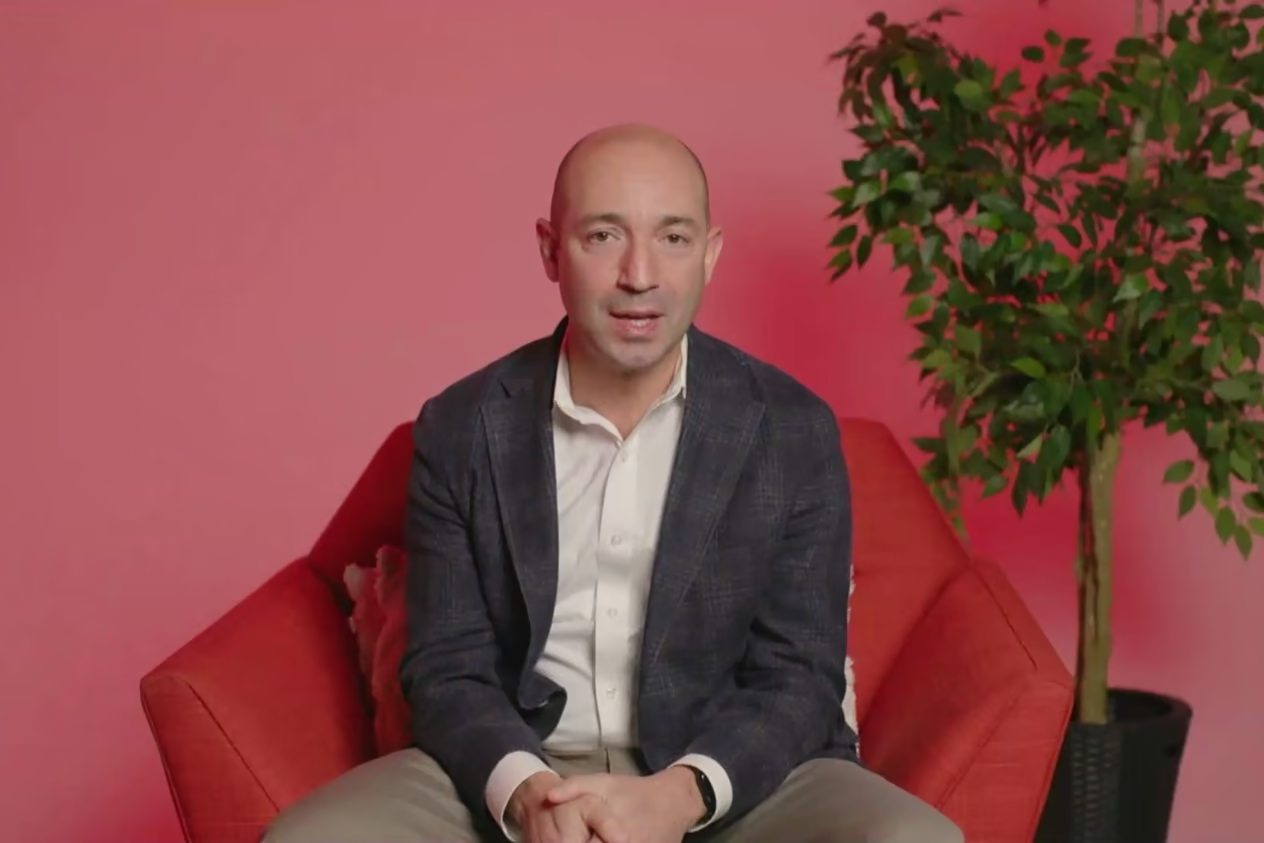


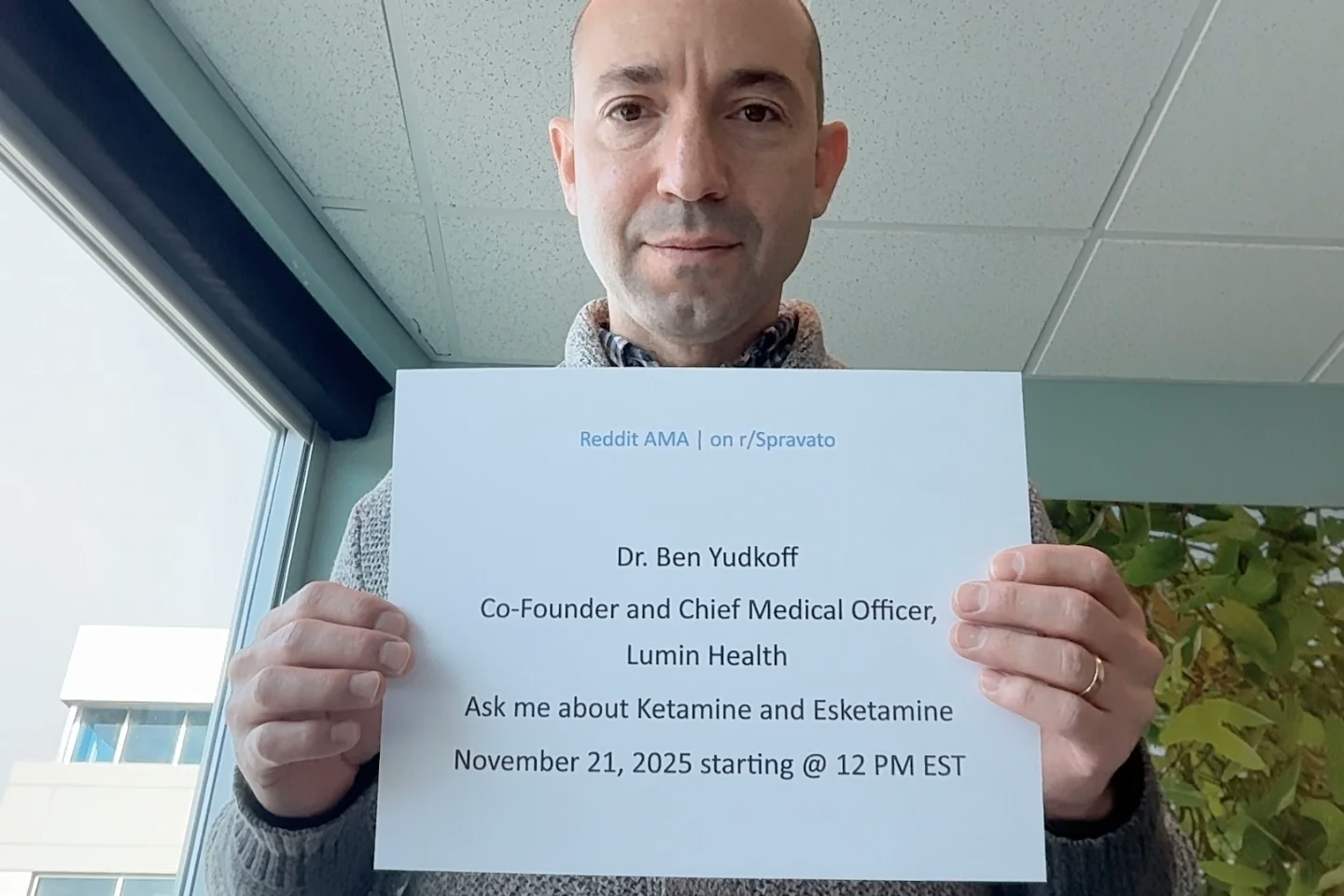
Dr. Ben Yudkoff, Co-Founder and Chief Medical Officer at Lumin Health, hosted a Reddit AMA on the Spravato community on November 21, 2025. The below blog post is a recap of one of the questions presented on that AMA, syndicated to the Lumin Health blog in the event that it answers any questions about ketamine therapy, Spravato treatment, or general concerns you may have about treatment.
Read the full AMA on r/Spravato here
Don’t hesitate to get in touch with us if you’re interested in learning more about ketamine for depression at Lumin Health. Thank you once again to the moderators and community members for facilitating such an engaging discussion.
kkanbara asks:
thanks for doing this, Dr. Ben. I'm considering starting treatment, but a few people that I've talked to in my life have told me it's dangerous, or that they don't believe it'll help. is that true? they've got me doubting what my doctor told me
Answer:
Kanbara, I've got a bit of a complicated answer for you. So many things, if unregulated, can be dangerous. If someone is saying Spravato carries with it dangers (or in the parlance of how doctors talk about it, the medicine carries "risks") they're absolutely right. But to be fair, there is very little out there that doesn't carry risk.
Spravato, in particular, has known risks. It has risks of causing side effects like blood pressure changes, heart rate changes, oxygen saturation changes, headaches, nausea, bad trips, double vision, sedation. There are moments when Spravato can introduce people to ideas and recollections that might be uncomfortable. Having said that it's also important to check risk appreciation against the reality that most risks can be mitigated.
A good medical clearance evaluation can understand what someone's baseline risks might be based on other medications they're taking or other comorbid medical conditions that could make Spravato more risky for an individual. A conversation prior to the treatment about how to manage the experiences themselves is important and can mitigate against risk. The truth of the matter is that Spravato has risks - but I wouldn't qualify it, a priori, "dangerous." And by analogy, water has risks: if I drink too much of it I might upset my electrolyte balance and cause harm to myself. Flying has risks but may not be considered "dangerous." Many times, appreciating something as "dangerous" has a lot to do with how novel something is and how in control a person feels over an experience. I think I'd try to understand a little bit more about what they mean by dangerous and whether or not it's something specific to you, your own experience of yourself, your history, or whether it's simply they think the medicine has risks and they're saying this medicine has risks in a different term.
As far as whether they don't believe it'll help, I guess I need more information here to answer that second good part of your question. Esketamine has been shown to be helpful in 60% (plus or minus) of people who have treatment refractory depression and depression with suicidal thoughts. There may be other extenuating factors that are important in regarding whether or not this particular medicine will be helpful for you. In these circumstances, where there's disagreement, I would ask for clarifying information from your family to see what they're seeing, and then bring that to a doctor and how those thoughts might impact treatment.
Take the first step today.
If you or a loved one in Massachusetts and the greater Washington DC/Maryland area is struggling with depression or anxiety, Lumin Health's team of experts is ready to help. Book a free 20-minute consultation to learn if ketamine therapy could be the breakthrough you've been looking for.
Available in Massachusetts and the greater Washington DC/Maryland area.