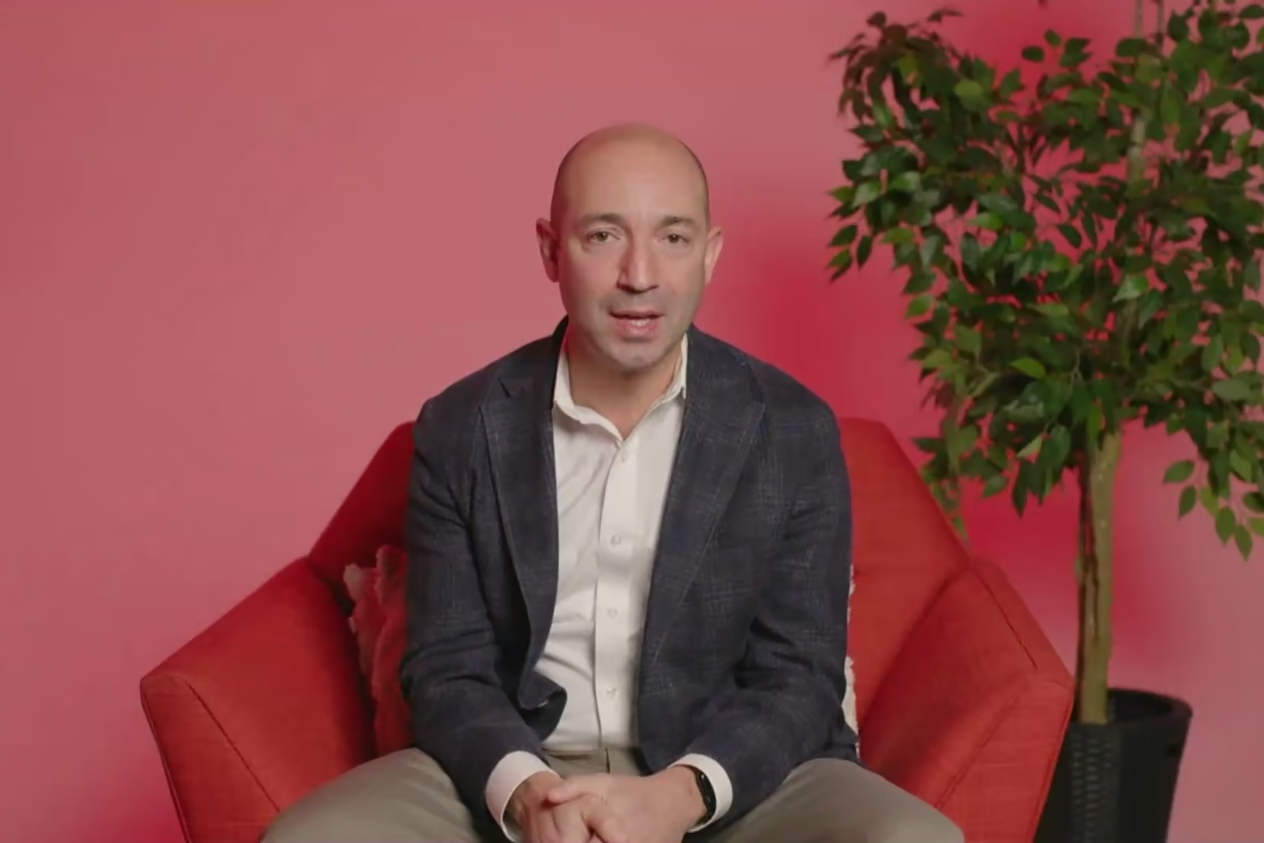


Dr. Ben Yudkoff, co-founder and Chief Medical Officer of Lumin Health, answered questions from the audience of a recent community event about ketamine therapy and esketamine (Spravato), and his answers are written up below.
Our locations are across Massachusetts and in Bethesda, Maryland, and these answers are meant for anyone exploring their options, wherever you are. One note on terms before you read. Esketamine (Spravato) is FDA-approved for adults with treatment-resistant depression, and for major depression with suicidal thoughts when used with an oral antidepressant. Ketamine for depression is an evidence-based, off-label use of a medicine that has been in use for over 50 years. Each answer below has a short video clip of Dr. Yudkoff if you would rather hear it from him.
Can I learn from other people's experiences online before starting ketamine therapy?
Dr. Yudkoff's answer is yes, with a caveat. Online forums are not as reliable as a double-blind, placebo-controlled study, and those studies are becoming more numerous. But reading what people write about taking this medicine gives you an open, democratic way to learn about real-world experience, unfiltered by a psychiatrist.
He suggests reading with your own situation in mind. Ask yourself whether the person sounds like you, and whether their circumstances are similar to yours. He also notes that AI tools can help pull reports from the community together, though he is clear that this age of AI comes with hazards as well as blessings. Treat what you read as a starting point for questions, then bring those questions to your care team.
How many treatments does it take to notice a difference?
There are a few decision points, Dr. Yudkoff explains. Most people who take the medicine notice a significant benefit by about the second week, around the third or fourth treatment. By the sixth to tenth treatment, most people who benefit have a good sense of what that benefit will be, and it usually does not change dramatically after that.
He adds an important nuance. Newer data from the maker of the nasal spray describes late responders, people who respond in the second or third month. They are not a large group, but they do appear in the evidence. Still, staying in care for two or three months without knowing whether it is working creates confusion. If you are near the end of the second month and are unsure, he suggests a good conversation about alternatives. There are many options, with different side effect profiles and different rates of success, and this is not a one-and-done treatment.
Does the dose go up over time, or do the effects fade?
Dr. Yudkoff calls these the right questions in the right order. The first answer is about tolerance, which he describes as habituation to the medicine. As far as we can tell, it does not reduce efficacy in aggregate. The strong sense of wonder and awe he described earlier in the event may not hit as hard with later doses, but on average the benefit does not change.
The second question is whether effects decline. Generally, no. There are individual cases where they seem to, and it can be hard to tell whether the medicine is working less well or whether life has simply become tricky, as it does for all of us. In those cases, his team adjusts the dose, or recommends coming in more frequently if the dose cannot be adjusted. In his words, that is the exception. The rule is that habituation does not result in diminished efficacy.
Is the ketamine experience considered psychedelic, and does it matter?
The short version from Dr. Yudkoff is that, mechanically, the answer is no. Classic compounds such as psilocybin and LSD act as modulators of the 5-HT2A receptor. Ketamine is not a direct modulator of that receptor and has a truly different mechanism of action.
Experience is another matter. He describes ketamine as a different house in the same neighborhood: not biochemically similar, but possibly similar in how it feels. He says that functionally, he thinks it is important to talk about it as a psychedelic, because people do have psychedelic experiences on this medicine that are personally meaningful and that drive introspection, recovery, curiosity and sometimes spiritual moments. He acknowledges that nobody knows quite what to call it. How you feel in a session, and what you make of it, is something you can talk through with your team beforehand. Our guide to S-ketamine and R-ketamine explains how the two forms differ.
What should I think about during a ketamine treatment session?
Come with questions, Dr. Yudkoff says, but do not expect tidy answers. You will probably not get an answer to the question you bring, and your mind will wander. Let it. In his words, if the spotlight lands in a different corner than you hoped, because the medicine affects how you make associations between thoughts and may take you down winding pathways. Stay with it and stay curious.
He is candid that no one has a perfect rulebook. His team has gathered enough experience to offer guidance, but not certainty, and he has been surprised by what works for different people. If you start thinking about something difficult and it is not steering you where you want to go, change course. These experiences are moldable, and you are in a participatory relationship with them. You may not have total control, but you can steer. Some questions may bring up hard memories, and that may be exactly what a person needs in that moment. Your team can plan those conversations with you ahead of time and be there for you during the session. Our guide to setting intentions in ketamine therapy goes further.
Is psilocybin treatment coming?
Dr. Yudkoff is excited about a synthetic psilocybin medicine that has been submitted to the FDA for approval. It may prove more durably effective, though it may also help a smaller group of people than ketamine has. Even if it is approved, he does not expect a universal rollout for some months, since it will need classification and specialty pharmacies first.
The practical questions are the ones he is working on now with other providers. What infrastructure does a good site need, given that a session lasting several hours calls for more movement, bathroom breaks and a comfortable environment than a briefer, more internal ketamine session? Who staffs it, and how are they trained? And how do providers advise people on one treatment versus another, hold space for a person's uncertainty before care begins, and guide them through harder moments without being overly controlling? None of this changes what we offer today.
Exploring whether treatment may be a fit
Treatment is delivered under medical supervision, with screening before you start, monitoring during and after sessions, and a ride home. Many major insurance plans cover the nasal spray. You can check your coverage on our insurance page. To learn about the medicines and the physician behind these answers, see our pages on the nasal spray option, the intramuscular ketamine option and our team.
If you are wondering whether ketamine treatment or esketamine (Spravato) may be a fit, we would be glad to hear from you and walk through your options together.