

The Clinical Importance of the Sacred Dyad in Modern Psychiatry
Sacred dyad psychiatric treatment refers to the profound, trust-based therapeutic relationship between a patient and their clinician. This partnership is not a luxury but a clinical necessity for navigating complex mental health conditions, creating the safety and stability required for profound therapeutic work to occur.
In a healthcare landscape that often feels fragmented and impersonal, the concept of a "sacred dyad" stands in sharp contrast. It moves beyond the 15-minute medication check and restores the focus to a deeply human, collaborative partnership. This is not a spiritual or mystical term, but a clinical framework built on trust, mutual respect, and shared intention – a framework essential for treatments that aim to fundamentally shift the brain's patterns, particularly in cases of treatment-resistant depression.
Why a Strong Therapeutic Alliance is Non-Negotiable for Advanced Treatments
Conditions like severe depression, anxiety, and PTSD are often characterized by rigid, cyclical patterns of thought and behavior. Neurologically, this can be linked to an overactive Default Mode Network (DMN), the part of the brain responsible for self-referential thought and rumination.[2] Your brain isn't broken – it may be stuck in a feedback loop.
This is where the limitations of some conventional treatments become apparent. Emerging, evidence-based ketamine protocol options, however, work differently. An evidence-informed ketamine therapy protocol, for example, can create what is known as a "neuroplastic window" – a period where the brain is significantly more open to forming new connections and learning new patterns.[3] A 2017 study in Scientific Reports highlights how ketamine can rapidly modulate neural circuits, offering a biological opportunity for change.[6] But this opportunity requires a guide.
A medication alone cannot teach you how to build a new life; it can only open the door. The clinician – the other half of the dyad – is the trusted partner who helps you walk through it. This is the core of effective ketamine treatment when addressing stubborn conditions like severe ketamine for depression cases.
The Role of the Dyad in Ketamine and Esketamine Protocols
At Lumin Health, our entire approach is built around this psychiatrist-led, dyadic model. We recognize that administering a powerful medication without an equally powerful therapeutic container is a disservice to the patient. For any advanced psychiatric care to be effective, trust must be the foundation.
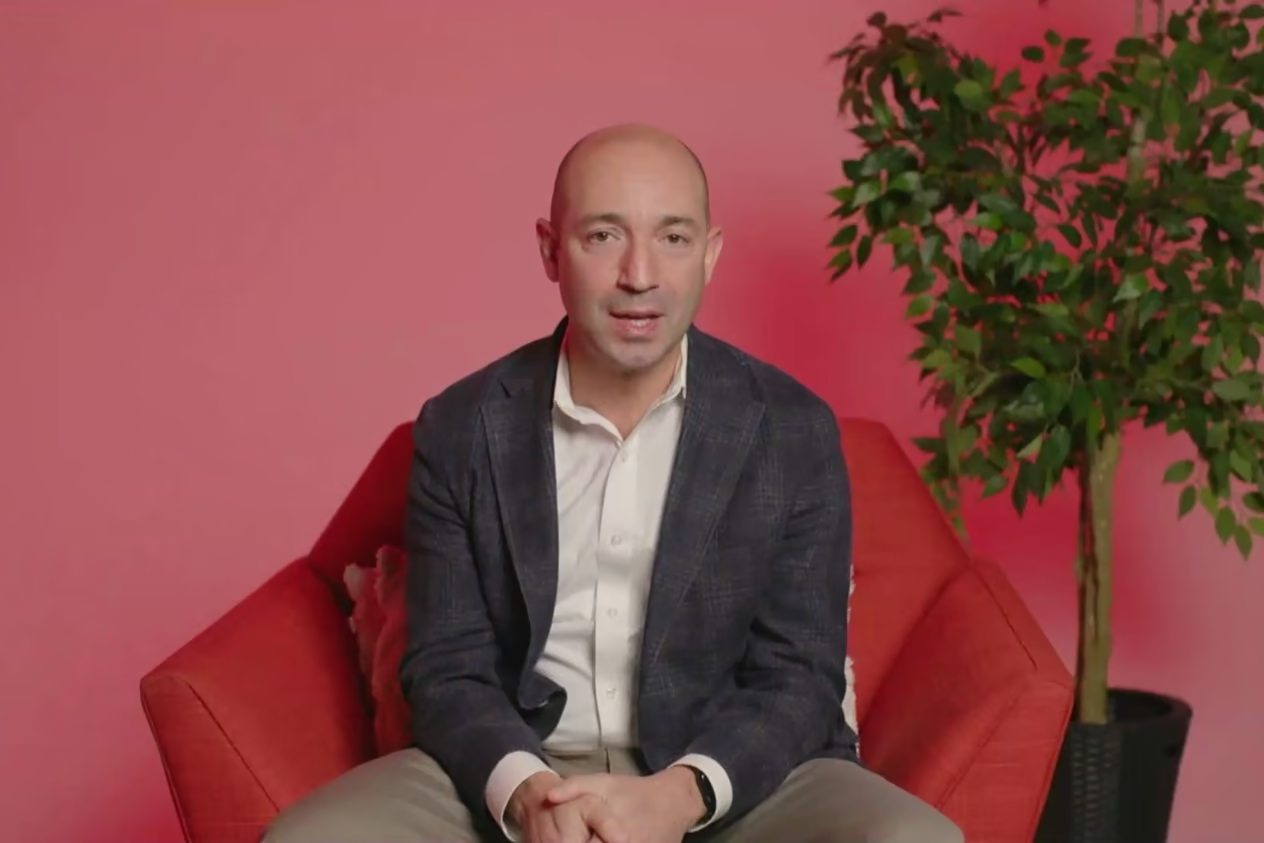
Dr. Ben Yudkoff, Chief Medical Officer at Lumin Health, states, "We are not just providing a molecule; we are providing a comprehensive, supportive experience. The biological effects of a treatment create a receptive state, but it is the safety and trust of the therapeutic relationship that allows a patient to truly process, learn, and build lasting change. Without that bond, it's just a temporary chemical event."
This philosophy applies to all modalities we offer, from off-label intramuscular (IM) ketamine treatment to FDA-approved Spravato. While Spravato (esketamine) is a nasal spray approved for adults with treatment-resistant depression[1], the protocol demands the same level of clinical oversight and support. The session is not just the administration; it's the preparation, the real-time support during the experience, and the crucial post-session work - psychotherapy with your own therapist or your own self-guided practice - that helps translate insights into actionable behavioral change, which can be critical for those exploring ketamine for depression.
Core Principles of a Successful Psychiatric Dyad
The strength of this therapeutic relationship is built on several key clinical pillars. The value of this strong "therapeutic alliance" is well-documented and considered a primary predictor of positive outcomes across various psychotherapies, as noted in extensive research published by the American Psychological Association.[4,5]
A Partnership Toward Meaningful Relief
Ultimately, choosing to pursue advanced psychiatric treatment is a significant decision. The success of that treatment often depends less on the medication itself and more on the expert, compassionate container in which it is provided. Moving away from the impersonal, high-volume model of care towards a focused, dyadic partnership may be the most important factor in whether a patient finds meaningful and lasting relief.
We at Lumin Health hope these insights serve as a valuable guide for anyone, anywhere, exploring how to find truly personalized and effective mental healthcare. If you are in our area and exploring whether this approach to ketamine therapy is a fit, we would be grateful to walk with you towards relief.
References
- Popova V, Daly EJ, Trivedi M, et al. Efficacy and Safety of Flexibly Dosed Esketamine Nasal Spray Combined With a Newly Initiated Oral Antidepressant in Treatment-Resistant Depression: A Randomized Double-Blind Active-Controlled Study. Am J Psychiatry. 2019;176(6):428-438. PubMed
- Evans JW, Szczepanik J, Brutsché N, et al. Default Mode Connectivity in Major Depressive Disorder Measured Up to 10 Days After Ketamine Administration. Biol Psychiatry. 2018;84(8):582-590. PubMed
- Li N, Lee B, Liu RJ, et al. mTOR-dependent synapse formation underlies the rapid antidepressant effects of NMDA antagonists. Science. 2010;329(5994):959-64. PubMed
- Martin DJ, Garske JP, Davis MK. Relation of the therapeutic alliance with outcome and other variables: a meta-analytic review. J Consult Clin Psychol. 2000;68(3):438-50. PubMed
- Horvath AO, Del Re AC, Flückiger C, et al. Alliance in individual psychotherapy. Psychotherapy (Chic). 2011;48(1):9-16. PubMed
- Schartner MM, Carhart-Harris RL, Barrett AB, et al. Increased spontaneous MEG signal diversity for psychoactive doses of ketamine, LSD and psilocybin. Sci Rep. 2017;7:46421. PubMed
You've read the science. Now take the next step.
Lumin Health provides safe, expert-administered ketamine and Spravato treatment across Massachusetts and the greater Washington DC/Maryland area. Your journey starts with a free, no-commitment intro call.
Available in Massachusetts and the greater Washington DC/Maryland area.
Frequently Asked Questions
Is the 'sacred dyad' concept in ketamine therapy a spiritual idea?
No. Despite the word 'sacred,' it describes a clinical bond held in the highest regard rather than anything spiritual or mystical. It's a professional, trust-based partnership between you and your provider, built on psychiatric best practices to create the safety needed for meaningful work.
What if I don't feel a connection with my ketamine therapy provider?
That is a valid concern to raise. A strong provider relationship depends on a good fit, and Lumin Health's initial consultation is designed to help find that fit. If a disconnect ever comes up, open communication with your care team is encouraged so it can be addressed.
Why does the provider relationship matter for a treatment like esketamine (Spravato)?
Because esketamine (Spravato) can bring on a shift in how you perceive things during a session, feeling safe with your care team matters as much as the medication itself. Knowing a trusted team is present, monitoring your vitals and offering support, allows you to engage with the experience rather than feeling anxious or alone.
Why does the therapeutic relationship matter in ketamine treatment?
A medication alone cannot teach you how to build a new life. It can open a window where the brain is more open to new patterns, called neuroplasticity, but the relationship with your care team is what helps translate that biological opening into lasting change.